- So my advice to people
is to kind of find your boob squad.
- I like the idea of like, you won't
be able to wear underwire, but,
find the equivalent in friends.
- Exactly.
- To give you the support you need to have around.
- To hold your breasts up.
- Thanks for being here.
- Of course.
- It's so nice to see you.
- It's nice to see you.
- So tell me about BlogHer this year.
It's very exciting, who's gonna be on?
- So BlogHer is our live event series,
and it brings together the most diverse group
of female content creators.
We used to have one, annual BlogHer,
but now we're doing kind of individual verticals,
so we're doing BlogHer Health,
and it brings together all these health bloggers,
all these women who are really wonderful
at being like, self care, you need
to take care of yourselves, which women have a huge
problem doing in general.
Jameela Jamil's coming, Alyssa Milano,
we have an activist called Edna Chavez,
she was part of the March for Our Lives,
so it's like really impressive women who will
make you feel like you need to do more.
- So basically, you're gonna shame us
and make us feel like we're not doing enough.
- I'm like, I got out of bed today,
I put this dress on, and I'm here.
- I've heard you talk about this before.
You say real change comes from real discomfort.
What do you mean by that?
- I think everything will stay the same
unless someone speaks up, and to speak up
in a room where everyone's comfortable
is a very uncomfortable thing to do.
So kind of calling people out, similar
to what Jameela is doing, but in a way
that does make you uncomfortable,
like you're not gonna be, it is so hard
to make change, and it starts with your own discomfort
and getting over that.
- Let's talk about boobs.
- Oh.
- Yeah, thank you.
You know, you were diagnosed with cancer
at a very young age,
how old were you when you were diagnosed?
- So I was diagnosed in 2014 at the age of 35,
like right before my birthday.
My aunt had had breast cancer when I was in college,
that's my mother's sister.
My mother had it five years prior to me,
and then my cousin, my mother's sister's daughter,
had had it two years before me,
so as my brother said to me when my cousin was diagnosed,
he just looked at me and said your boobs are doomed.
- How charming.
- Yeah, it is nice, I was like, and I understood,
I was like yeah, but I didn't think anything of it.
- You wrote a really, really powerful piece for Coverture.
- Yeah.
- Because you talk about cancer,
because you talk about these issues with humor,
you do make it a little less scary,
because it is scary.
- Well I have to credit, my aunt is
one of the funniest people you'll ever meet,
she got diagnosed first,
and she dealt with, she needed chemotherapy,
they removed 20-something lymph nodes.
She handled it with such grace and charm and humor,
so our family, that's how we operate.
We're like, you have cancer?
LOL.
- So your brother also features a lot in the piece,
I love that, your brother, he's just a curious fellow
because he played the card before you could.
- Oh, he played the cancer card
not even six hours after I got diagnosed.
My friends and my brother all came over
to my apartment for dinner and he was supposed
to meet friends for drinks and he like stepped
out for a second, he called them, he said,
"I'm so sorry, my sister has cancer,
I can't make it for drinks," and I was like really?
That's what we're playing the card on?
(laughing)
And he's like, "It worked, it worked really well."
- Wait, you're like wait a second, I get dibs,
like if I have the cancer,
at least I get dibs on the cancer card.
- I know, and he went out that night
to get all of us Chipotle, that's what we decided
my cancer meal would be, and my order
is the one order he screwed up.
So when my cousin finished chemo, everyone was like Reshma
you need to get your mammogram.
I'm 33, 34 years old, I really don't want to.
They gave me my first mammogram.
The woman's like, "So, I just want to warn you,
you have very dense but perky boobs,"
and I was like, are you calling my boobs stupid?
- It's like a back-handed compliment.
- Attractive?
I was like thank you, but she was trying
to tell me that when you have dense tissue,
it's hard for them to see anything.
So they do this biopsy, they find nothing.
They're clear, I was like ah, great.
About a month or two goes by,
they decide to do an MRI, and they see something
on my left breast, and then they do an ultrasound,
and the ultrasound technician said to me,
"I don't know how I missed this."
So they did a biopsy, and on March 4th, the doctor
called me at my office and said,
"I'm so sorry, it's cancer."
And like, I'm not a person who gets emotional or anything,
but I like burst into tears,
because I was like, you just feel like you don't really
hear anything after that.
- I think you and I when we first met,
I'd literally just had, I can't remember whether I'd had
the biopsy as well.
- Oh yeah.
- But I think I did, I think I'd just had the biopsy
when I'd met you, but it is a scary thing
when you'd go to a mammogram.
My grandmother was 28 when she died of breast cancer,
so I think my mom was five years old when her mother died.
- That's crazy.
- It is, it's so young, isn't it?
And then you know, we just have like lumpy boobs.
- Yeah.
They're called dense.
- I'm sorry yours are dense and perky.
- Yeah.
- It's one of those things where when you're told
like, oh you know, they're kinda lumpy,
they're kinda dense, like we can't really tell,
and that moment where someone sort of says
we found something and we're gonna have
to do a biopsy, and then you're right,
it does just, the floor kind of comes from underneath you.
- But even when they said they found something,
I don't know if you felt this way,
even knowing my whole family had it,
I never thought I would get it.
- See I was different.
- Oh really?
- But it's different though, because I'd,
thankfully, mine was benign.
- Yeah.
- But I knew they were gonna find something.
I don't know why.
- After my lumpectomy, I go to my oncologist.
I said so, what about pregnancy?
He said, "oh, pregnancy, for you?
No."
Just like that, no.
Having male doctors in something like this was just,
was kind of upsetting because I don't think they could
truly understand what saying to someone, oh no,
so then he explained it.
- What does that even?
- I said no, meaning like, never?
He's like, you've gotten this very young,
if it comes back we have a problem.
And so we talked to my mom and my mom
and I from the beginning, she'd said to me,
if there is a risk that your cancer could come back
and you're gonna end up dying when you're 45,
she didn't say it like that,
it just is what I kind of inferred.
- Reading between the lines.
- Exactly, you're gonna die when you're 45,
do you want to leave a child?
It upsets me, because I'm like oh, I really,
you always think, like, especially when you're younger,
a lot of women do at least, oh I'm gonna
be pregnant, I'm gonna have kids,
and especially because all my friends around me have kids.
- That's the thing, when it starts to be that age
where all the sudden everyone is having kids.
- Everyone has children.
So I've come to the terms that I can't have children
biologically most-likely, but it doesn't mean I can't
be a mom in other ways.
So whether it's adoption or this, my breast surgeon,
Dr. Alexander Heard, my first session with her,
she basically said we do not recommend a mastectomy for you,
that is not helpful at all,
which was such a relief to hear
and so different from what the first doctor said.
- Yeah, it's nice that it's not
just a casual mastectomy on a Tuesday.
- Yeah, she was just so great about it,
and she's like and also, just so you know,
the average age of women having their first child
in New York is 38, which also made me feel so good,
and I was like ah, I have time, right?
I get my lumpectomy, I go through radiation,
my boob turns black.
- It turns black?
- It turned black, it like burned so much,
so I called it my very, very, very, brown boob
and my other boob.
- Right, just and the normal brown.
- Right, less brown boob.
- That's really scary though, I mean like,
that's a terrifying thing.
- I couldn't wear a bra and you know, I'm well endowed.
So I had to walk around without a bra,
I can't wear normal bras anymore.
I have to wear like little sports bras because--
- Where do you go to get them?
- I don't know I need new ones, so if anyone knows.
- If someone could let me know.
These are all the kind of questions I imagine
that when you're going through it.
- Yeah.
- What kind of questions were you all the sudden
kind of asking yourself, like, oh wait,
where do I get bras now?
- I got something called lymphoedema,
which everyone can google, but basically
I have to wear a compression vest when I fly,
a compression sleeve, which is like a straight jacket.
- Who looks like a terrorist and a bomb, this is excellent.
- Oh yeah, speaking of, I get padded down
at the airport all the time obviously,
because I go through, it goes off.
- Random search, oh sorry.
- They send like a female TSA agent who's like ready
to pat down aggressively, and I was like oh,
I have breast cancer, and then they get scared like,
do you want to go into the back room?
And I was like what the hell is happening in the back room?
I was like no, no, no, I just mean be gentle, that's all.
- Their first thought is, do you want me to glove up?
No.
- I was like what's happening?
- Put that glove down, you're fine,
it's okay, don't need that.
- Yeah, I was like just be gentle.
- Thank you so much, this is just wonderful.
And I just do think that you're doing
such an important job, because it's hard
to talk about this stuff, and you were talking
about it in a way that I think is accessible,
and that's so important because it is something
that is a topic, like I said, you just want
to put it away, you don't want to confront it.
- And you want to encourage women
to tell their story, to be honest about it,
because I think for so long women have been taught
to pretend everything's great, and it's not.
Spoiler alert, it's sometimes not.
So you just wanna tell people
it's okay if things are not okay.




 For more infomation >> Heidi Daus "Love Struck" Enamel and Crystal Pin - Duration: 3:19.
  For more infomation >> Friday Flashback: The TODAY Team Share Throwback Pics | TODAY - Duration: 2:40.


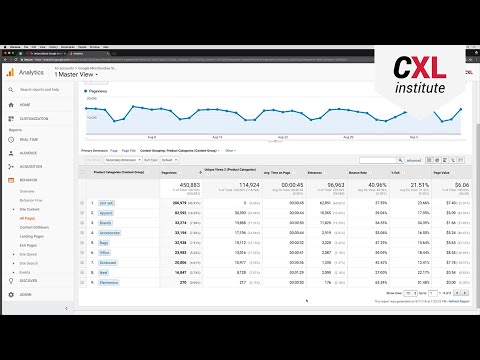 For more infomation >> Slice & Dice Data with Content Grouping - Google Analytics Conversion Optimization Tools - Duration: 3:44.


Không có nhận xét nào:
Đăng nhận xét