Clik to wiew the English subtitle in the box belov
WHATCH THE FULL VIDEO ON MY YOU TUBE CHANNEL "CLAUDIO CARMINATI"
-------------------------------------------
Oxygen Party Bar – Oxygen Party Bar Rental - - Duration: 1:05.
Are you looking for a fantastic Oxygen Party Bar Rental?
Welcome to Oxygen Party Bar, the ultimate oxygen bar rental service since 2002.
We are the leading Oxygen Party Bar serving Los Angeles, and Orange counties.
Oxygen party bar rentals are good for holidays, birthdays, trade shows and just about any
occasion you can think of.
Party Organizers love it because it makes their party planning shine.
In minutes, Oxygen Party Bar can take the ignorance out of being drunk, raise oxygen
levels in blood, and give you that extra energy you need, as well.
It also helps relieve cramps, fatigue, heat exhaustion and more.
Oxygen comes in a variety of different aromas such as apple, Pina colada, and eucalyptus,
to name a few.
We will enhance your Oxygen Party Bar rental experience.
We serve Fun, Kids love it and Adults need it, so if you're ready for your Oxygen Party
Bar rental, contact us at OxygenPartyBar.com or call 562-594-8265.
-------------------------------------------
TEKKEN Mobile Hack - Coins and Gems ! - Duration: 2:33.
TEKKEN Mobile Hack
-------------------------------------------
Moms Gone Strong - Kettlebell Deadlift - Duration: 2:43.
The conventional kettlebell deadlift is a great lower body strength exercise in
trying to conceive, first trimester and even into second trimester, depending on
how your belly is feeling, how big it's getting, how stable your core is feeling.
And so what Jessie's going to do is she's going to set up with her feet on either
side of a kettlebell. Now she's only going to do this if she's already
mastered what the hinge variation looks like, so she's going to think about
getting chopped at the hips, push her hips back, grab the kettlebell. If she
went to push her hips back and she stopped and her hands were still a little
bit about the kettlebell, she would just squat down the rest of the way to get
there while still pushing the hips back. You'll notice her hips are about halfway
between her shoulders and her knees, yep perfect, so she's not dropped down all
the way because that would be a squat. And her hips aren't all the way up, so
about halfway between her shoulders and her knees and she's going to tense her
lats and keep them nice and tight and then she's going to pick the kettlebell up
off the ground by thinking about driving her feet through the floor. She's going
to stand up, pull the kettlebell right into her zipper and reverse the motion
to put it back down, good. Just give me a couple reps. So she's staying nice and
tight, pulling the kettlebell right into her zipper and again she's only about
26 weeks along, so as long as her core is feeling nice and stable she can
perform this exercise. Another option, if you weren't feeling stable in the core,
you weren't feeling comfortable being so leaned over, you weren't feeling
supported, we call it the "hands-free mama" feeling. So if you feel like you can do
this exercise hands-free then you're probably good to go. If you feel like you
kind of need to grasp your belly for support, it's probably not for you. You
can always elevate it on like, a block or a couple of places, so that it shortens
the range of motion. Now this is a 35-pound kettlebell, so generally,
depending on how long you've been dead lifting, you might go a little bit
heavier than that. Jessie's going to show you what the double kettlebell deadlift
looks like, so she's turning to kettlebell so that the handles are going
in line with her feet, she's going to straddle the kettlebells and she's
going to grab them just like this. Some people recommend grabbing the
kettlebells like this. We feel like that pulls the shoulders a little bit too far
forward, so instead she's going to pull the shoulder blades back and down, grab
the kettlebells and deadlift them right into her zipper, reverse the motion to
put them right back down, give us a couple reps, Jessie. You know she's nice
and tight, she's finishing with her glutes, she's not finishing with her
lower back, and she's not tucking her bum under too far, so she's just staying in nice,
neutral alignment, core braced, shoulders back and down, and bringing her hips and
thinking about driving the feet through the floor to complete the movement. So
that is a conventional kettlebell deadlift with a single kettlebell and
double kettlebell.
-------------------------------------------
Should I Buy Nine Parchments On The Nintendo Switch? - Duration: 2:06. For more infomation >> Should I Buy Nine Parchments On The Nintendo Switch? - Duration: 2:06.
 -------------------------------------------
Trip to Canada - Duration: 1:36.
*Sound Effects*
* Going up the Skylon Tower*
* Going down Skylon Tower*
*Going across the Rainbow Bridge*
*Say goodbye
*Goodbye*
-------------------------------------------
The sales story - Dr. Martin Auer MBA (137) - Duration: 4:08.
Hello, this is Martin Auer speaking again from Science Sales Academy.
This video is number 137 and it is about: The sales story
The sales story provides a basic, attractive and appealing answer to the question
"Why should I as a customer purchase your product?"
- regardless of product specifications or technical features.
Each sales message is, in a sense, a story.
In most cases today unfortunately it is the wrong story.
Often, the sales story is really bad.
Which is why most sales stories do not really work or even do the opposite of what they are meant to do.
In such a poor sales story the sales company is glorified as a hero, the goal of the hero
is that the salesperson makes the close and the customer in this sales story is a background actor,
who supports the hero either to achieve his goal or fight against it.
Such a concept of a sales story is fundamentally wrong.
In a good sales story there is only one hero, and that is the customer - and not the salesperson
and not the sales company.
The hero's goal in this sales story is exactly what the customer wants to achieve.
And the salesperson or the sales company in a good sales story is a background actor,
who supports the hero, which means the customers, to reach their goal and to provide them the
best available tool for this task.
What makes a good sales story?
• A good sales story is not focused on the product nor on the sales company, but rather
on the answer to the question why as a customer you must choose this product in order to achieve
their goal.
• A good sales story always works with concrete and tangible statements and never with abstract ones.
• A good sales story always addresses the emotional level and is not intellectual nor technical.
One example: The best example of a very good sales story
is that of IBM in the 1980s.
IBM as the largest company with the most patents, the highest turnover, the most employees, etc.
had lots of material for a normal, classical sales story.
Instead, their sales story was only "Nobody ever got fired for choosing IBM".
This sales story can only be described as brilliant.
Do you want to learn more about the power of sales history?
Then just contact us, we will help you!
Please subscribe to my channel and never miss a new video – here on the right bottom side.
It's totally free of cost for you and there are no further obligations whatsoever,
for you it is only one single mouseclick and for me – well, me it helps a lot!
Thank you very much!
And – as your personal starting point to more effectiveness in everything what has
to do with people, just click on this little „i" at the right top side - here is free
for download your personal DISC-booklet - your most important foundation for success in strategic
sales in lifescience- and biotech market.
You have questions?
Just contact me.
My contact information is on my homepage.
Science-sales-academy.com Thanx a lot for listening and watching, take
care and see you again next time!
-------------------------------------------
Rub This Cream On Your Belly And You Will See How You Eliminate Fat Without Exercise - Duration: 1:43.
Visit Our Website Here : http://bit.ly/2q90Dxh
You just need to rub this cream on your belly and you will see how you eliminate fat without
the need to exercise
Many people have already tried this cream that we are going to present today and its
number is increasing more and more.
This cream gives you excellent results in a very short period of time.
We all strive for the perfect body and this is a recipe that everyone should try.
The excellent results will appear in only several days.
This miraculous cream has the ability to eliminate accumulated fat.
In addition to significantly reducing cellulite, but also helps to return the skin to its place,
because we all know that it can loosen during the process of weight loss.
The good thing about this effective cream is that it has no side effects.
You can also use it to remove the accumulated fat in the belly, to lower the volume of the
abdomen, thighs and in any other area where you want to lose fat and weight.
Natural method to eliminate fat from the waist All you have to do is mix all the ingredients
very well until you get a cream.
Apply it in the areas where you want to lose weight, and then wrap it with a little plastic
wrap or wrap and cover with a strip.
Leave it on for about 20 minutes and wash the area with warm water.
This cream is not only can be used to lose weight, it will also improve the appearance
of your skin, and best of all it will save you time and money.
Do not wait any longer and give it a try today that you will not regret it.
The results will be visible at all times and you will be surprised.
We really hope you enjoyed this article, thanks for reading and do not forget to share this
article with your friends and family.
Thank you.
Thank you For Visiting Our Youtube Chanel Please don't forget to subscribe our channel
Subscribe : http://bit.ly/2rRgSLG
-------------------------------------------
Boston T on Android with Mapway Labs - Duration: 1:11. For more infomation >> Boston T on Android with Mapway Labs - Duration: 1:11.
 -------------------------------------------
The first day of December and 6 price hikes - Duration: 5:20.
Hey guys, you're very welcome to this episode of bonkers.ie TV.
Happy December 1st! December 1st is usually a happy day where I think it becomes
officially okay to start talking about Christmas.
- Yes and most people, though, have still been talking about it for the last couple of weeks
but today is the first day you can do it! - Yeah, so we've been kind of blocking our ears...
from all the Christmas talk up until now...
but unfortunately it's not necessarily such a happy day for Irish households when it
comes to personal finance - Yes, we've been joking around that today
is the real "Black Friday" because 6 suppliers of household items today
are hiking their prices and this includes energy suppliers and broadband
providers. So, first of all, we'll look at energy. Today, Energia, Flogas, Pinergy and PrePayPower
are all introducing new price hikes, so what kind of increases are we looking at, Mark?
Well, we'll start with Energia. They're increasing their electricity prices today at by 3.9%
which will add about €31 on average annual electricity bills.
Flogas are increasing their gas prices by 3.3% which will add about €20 to average annual gas bills.
Moving on, then, to Pinergy; their increase, which is a 5.6% electricity increase will add about €41
to average annual electricity bills.
And then PrePayPower, their increase will add about €34 to average annual electricity bills.
- So some pretty big hikes there. - Yep, so some not insignificant price hikes there but
it's not as bad as the broadband unfortunately. So, both Sky and Vodafone
are increasing prices for certain customers today and what kind of
increases we looking at? - Well, starting with Sky, they're increasing prices
for certain broadband customers and certain TV customers. Now not all
customers are going to be affected by these increases the way they are in
regards to gas electricity. The price increases will affect what they call
'legacy customers' so this mainly means customers who have maybe signed up over
a year ago under seeing a price increase now to take the prices in line with
existing prices. That's at least what the providers are saying.
So, the increase from Sky will be about €2-€4 every month.
Then with Vodafone the price increases
again they're just for legacy customers but will affect certain broadband
customers and certain phone customers and they'll add about €4 to average monthly bills
but there are a couple of outliers. So, Simply Talk customers are
going to see a €10 increase on thir monthly bills levels so €120 a year.
- Yeah, that's quite a lot so I'd say definitely, if you're on Vodafone, maybe look into
switching for sure. - Yeah, or even if Vodafone will give you
a new package. Like, they've got some good new customer offers
so maybe they could, you know, do a deal and give you a new customer deal or
course you could switch as Robyn said as well, but you know it really does paint a
tough picture if you consider a customer who maybe gets their gas from Flogas...
...their electricity from Energia or Pinergy or a PrePayPower, their TV from Sky...
...and their landline from Vodafone, they're gonna see no change in the actual
service they're getting but they'll get four price increases in one day today
December 1st and that can add up to literally hundreds of euro of a price
increase over the course of a year so pretty tough.
- And then to add insult to injury if you commute to work on public transport...
...you're going to see immediate price hikes to your pocket today because Leap fares are also going up.
So, for Dublin Bus they're going up between 10 and 15 cents or roundabouts
and then for Dart fares you're looking at an increases of up to 4.6% so
not a great day all in all for Irish consumers. - It is bad timing particularly
as we now head into the Christmas season which is a very expensive for a lot of
households and also the weather has been unbelievably cold, which means...
- Bigger bills! - Yeah, people are hiking their, turning up their gas
to heat their home and their electricity being used more in the dark mornings and darker evenings
So it does come at a bad time but there are some things you can do if you are
a customer who's on the receiving end of one of these price hikes today, we'd love
to hear from you. Let us know your feelings on the price increases in the
comments below and let us know if you're trying to figure out ways that you're
going to maybe get around the increases because we're here to help, that's
exactly what we're here to help with. Help you find ways to lower your bills
either by reducing your consumption or various other things we can advise you on
Or of course by switching to a new supplier - Which is really easy to do! Yeah.
- It is, for both gas & electricity and broadband
So, we'll provide a number of links to different blog posts we've written about all of
these topics in the comments below and you can check them all out on bonkers.ie/blog
So, my advice would be, like, don't take those price hikes lying down.
As it were. You can do various things to get around them and we're here to help you
find out what the best move for you might be.
Until then, until next week, enjoy December 1st, enjoy the beginning
of the festive season don't let the price hikes get you down too much.
Thank you so much for watching. - Thanks.
you
-------------------------------------------
Prepare St. John's Wort Oil And Cleanse Your Blood And Relieve Pain! Here's How! - Duration: 2:23.
OUR WEBSITE : http://justhealthrelated.com/
Prepare St. John's Wort Oil And Cleanse Your Blood And Relieve Pain! Here's How!
St. John's Wort has lots of healing benefits which is the reason that it has been used
since ancient times.
St. John's Wort is ideal for wounds due to the fact that it has soothing properties.
It is praised as perfect remedy for nerves, and it also reduces cramps and dissolution
of mucus.
The oil from this plant is especially recommended against burns, fresh bleeding injuries, muscle
injuries, hemorrhages, contusions and for treating acne, ulcers and swellings. St. John's
Wort oil is extremely beneficial for the skin, as well for cracked skin and dry scaly skin.
Preparation
The preparation is basic, and this oil is a must for every household. The good thing
is that it lasts up to 2 years.
Gather the plant while it is still fresh. Then, you should carefully remove the leaves
and flowers and put them in some big bottle. Pour them with 3-4 times larger quantity of
olive oil. Close the bottle well and leave it to stay
on the sun for 6-7 weeks. Shake the bottle occasionally. The oil will quickly turn red.
As soon as the 6-7 weeks are passed, you should strain the liquid through clean gauze. If
you find watery layer on top of the liquid, remove it with plastic spoon. The oil is done
and now you have one of the most efficient remedies at your home.
A tablespoon of this oil is also a remedy for red worms. However, you must eat some
fruits that will improve your stool (pear, rhubarb) since the oil could cause slight
constipation.
Besides the already mentioned applying as a solution for wounds and skin care, this
oil is effective in rubbing ischemia (lumbargo), pain caused by gout and rheumatism, sprains
and back pain.
Internal Use Of St. John's Wort Oil
This oil can be taken as an internal remedy as well. You can combine 10-15 drops with
½ a teaspoon of water. You can consume it in this form for treating stomachache, colic,
intestinal inflammation, uncontrollably bed-wetting in children and adults and extreme mucus in
the lungs. Always keep this oil in dark areas and dark bottles.
Don't Forget To Follow Us On Other Social Media :
YouTube : http://bit.ly/2e1vK3L Facebook : http://bit.ly/2kYKuD0
Twitter : http://bit.ly/2ksd98v Pinterest : http://bit.ly/2gh7g9U
Instagram : http://bit.ly/2z2YbZN Daily Motion http://bit.ly/2z389dB
Google Plus : http://bit.ly/2kqyrUa Tumblr : http://bit.ly/2xXbehS
Subscribe our channel for more!
-------------------------------------------
Guys, Yemi Alade Has A Question For You All, Let's See How Many Can Answer Correctly|NVS News - Duration: 1:30.
Guys, Yemi Alade Has A Question For You All, Let's See How Many Can Answer Correctly
Singer Yemi Alade is bent on ensuring that everyone and I mean everyone gets a bit of her BLACKMAGIC.
The JOHNNY crooner, took to IG to again talk about her soon to be released album BLACKMAGIC posting a photo of herself rocking a barely there outfit with a caption that got many of her fans reacting.
YUemi captioned the photo:.
ALL WE NEED IS LOVE… #BLACKMAGIC.
Can I Be Your International Village girl ?.
So guys, can she?.
-------------------------------------------
Hamburguesa Vegana de Frijoles! Vegan Bean Burger! - Duration: 5:55.
Hello everyone I'm Carolina
Thank you so much for visiting my channel
and welcome to this new video!
The ones who know me really well, know that when it comes to fast food,
hamburgers are a winner, more than hot dogs.
And well, the challenge now is how to make a burger without "animal meat".
I tried some recipes with different ingredients,
until I found the one I liked the most.
The ingredients for this burger are:
For the patties we're gonna use beans,
In this case I used 2 cans of kidney beans,
remember to wash them very good.
You can also use regular cooked beans and it's even better.
Finely chopped garlic and red onion.
For the patties we need something to hold it up,
that's why I'm gonna use a corn flour called "Doña Arepa"
straight from Colombia, I love this flour,
but don't worry, if you don't have it
just use oatmeal, rice or another type or flour that is not refined.
I'm also going to add veggie protein powder because I'm not eating much animal protein anymore.
I'm going to use this chachafruto protein, also from Colombia.
For the ones who follow me and live there, try it, It's super.
and there is no problem in if you don't have it.
We can not forget the cheese,
I am still struggling a lot trying to stop eating it because I love it.
This time I'm trying a vegan option, and let me tell you guys something:
You ALWAYS have to read the ingredients because even
if something is vegan or vegetarian doesn't mean that it's healthy.
And if you guys can't get vegan cheese don't worry,
just make sure to pick a good cheese with good ingredients
and not to many additives.
We should also have tomatoes, lettuce, onion, and pickles ready.
The last one is optional but I personally love it.
We're going to make a burger without bread, so we're going to need lettuce.
For the bread, try to find one that is whole grain and if you can't find it,
I got for example a white bread that only has flour, salt, and water,
and another spelt bread that is a healthy wheat derivative.
Let's start with our recipe.
Add oil, in this case I used coconut,
add the garlic, then the onion,
and this time make sure the onion is translucent and soft.
When it's ready put the beans,
the garlic and onion into a food chopper,
or you can also use a blender.
Add cumin, salt, and pepper to taste.
I added vegetable protein powder.
this step is optional, so don't worry.
Mix
Here we must have a little bit of patience because you can't add too much water to the mixture.
This is to make the mixture homogeneous.
I added just a little bit of water.
We've got our hamburger "meat" ready.
We're going to put it into a bowl.
Add the corn flour.
Remember, if you don't have it, just use another type of flour,
stir and start making the hamburgers,
I added a little more flour,
That's how they are supposed to look,
in this case I got four patties.
And the next step is to fry them.
You have to be careful when flipping them out.
Put the cheese on and we've got our patties ready.
Let's build the hamburgers,
I'm going to use ketchup and mustard.
Add the lettuce,
then the burger patty,
tomato,
onion,
and pickles
Do the same procedure for the lettuce hamburger.
And last, the hamburger with spelt bread.
The hamburgers are ready.
Hmmm, I must confess, the one without bread looks a little clumsy,
but well, it's worth the try.
I hope you enjoyed this video, and that you liked the recipe.
Make the recipe at home,
Remember to follow me on Instagram, my nickname is @negrita_ccc.
I'm posting there photos with recipes and tips for healthy eating.
Thanks again for your time, and see you soon!
And well... Let's try the hamburger!
-------------------------------------------
A Toolbox of Musical Understanding, with Scott Sharp - Duration: 42:54.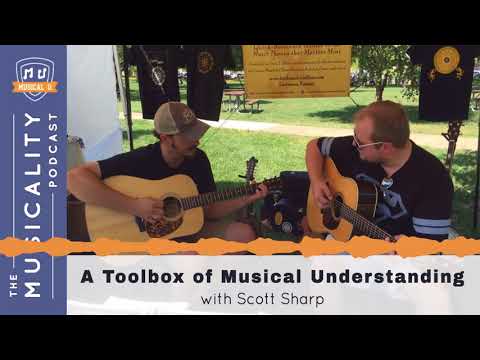
Ever wondered why some people seem to have a gift for music have you ever
wished that you could play by ear sing in tune improvise and jam you're in the
right place time to turn those wishes into reality welcome to the Musicality
Podcast with your host Christopher Sutton. Hi, this is Christopher founder of
Musical U and welcome to the Musicality Podcast. Today I'm talking
with Scott Sharp the creator of a fretboard toolbox, an innovative way to
explain the notes and chords in each key show guitar bass piano banjo
and more interestingly Scott started learning music later than you might
expect and really didn't consider himself all that musical but an
impactful experience in his day job as a high school biology teacher unlocked
music theory in a way that let him start improvising playing by ear and being
creative and confident in music he built on that insight to create his fretboard
toolboxes for a range of instruments and he provides them online at
fretboardtoolbox.com he's also just released a very cool theory by hand
ebook that makes it easy for you to figure out the scales and quotes in any
key in this conversation we talked about the big theory insight that let him
start playing by ear and improvising and led him to create a whole new way to
show how music theory works we talked about why learning to play a whole bunch
of different instruments it's a nearly as hard as you might imagine and we also
talked about the advice Scott would have for anyone who fears their own musical I
think Scott's fretboard toolboxes are super cool and they're a great resource
for any musician looking to explore the creative side of music making and give
themselves a shortcut to sounding good and understanding what they're doing
with the notes they choose to play I hope you'll enjoy this conversation and
come away inspired to explore this approach to theory yourself my name is
Christopher Sutton and this is the musicality podcast from musical you
so Scott sharp you have a great name for music education I presume there must be
a Scott flat out there somewhere that's your arch nemesis the beginning if you
wouldn't mind how did you first get started making music the friend of mine
in college played guitar and lots of great Neil Young tunes and and I always
thought I'd love to play the guitar but I was 22 and I thought well it's just
too late to start and he made a mockery of me and said you got plenty of time
left and and so I got started with it and and have been going ever since
fantastic and how did you find that experience of learning guitar did it
come easily to you absolutely frustrating and absolutely difficult for
me i-i've always loved music but I aside from a few months of trombone and fourth
grade I have no musical training and and those first few times trying to play
chords on a guitar just brutal on your fingers and and and my ear was not
developed at all I had no clue about how notes relate to each other and so it was
a lot of years of just fumbling around and that how did you think about that
and did you worry that maybe you didn't have what it took to be a guitarist did
you were you thinking about like talent and having a gift or were you kind of
comfortable with the fact that this was just gonna be something that took a lot
of work no I thought that there was definitely just there's musical people
and non-musical people and I was in the in latter group but clearly you loved
music enough and I guess you were seeing a bit of progress I had to stick with it
yeah by yeah yeah just just enough to to keep me going at it but then I'd take
long periods off and then pick it back up and and it just kind of felt like I
had plateaued at a really low level for a lot of years hmm and music was a hobby
for you guitar playing with something you did in the evenings and weekends was
it absolutely yep just for fun and just songs Bob Dylan songs I like or Neil
Young songs I'd like and look up the chords and
try to fumble through it and obviously now you know with fretboard toolbox
you're somebody that people look up to as a music educator and are inspired by
how did you get from there to here where did you go next with your guitar
learning well I teach high school biology and I have this will be my 17th
year and about 10 years ago I had a student who would I've always had a
classroom guitar just something the kids could noodle around on or I could noodle
around on and I had a student who showed me a phenomenal guitar player and and he
showed me that there's certain chords that go together in a key and this was
towards the end of the year maybe maybe March or so and not just it was
mind-boggling for me like oh there's rules to which chords go together and
you can predict what chords sound good together I had no idea so take me back
to that moment how did that conversation come about why why would your students
suddenly telling you about all this he had taken music theory class at school
and and was just playing and he knew I was a frustrated guitar player and and
he just casually mentioned one day like oh don't like certain chords go together
in a key and and I thought what are you kidding and and so so then he wrote out
a chromatic scale for me mm-hmm and then and then I took I took a sheet
of paper and and made marks like where the 1 and 4 and 5 chords were because he
told me what those 1 4 or 5 chords are and then I saw that if I could slide
that piece of paper back and forth on a chromatic scale that it would show me
what the chords were those three chords were in every key and and I just thought
wow this is the coolest thing I've ever heard and had you dived into theory
before that had you studied a bit of theory but not come across this
particular way of thinking about it or was theory just not a part of your
guitar learning up until then never even thought about it I never gave him one I
had heard of dobre me facility you know but that was that was the extent of what
I had heard of and what did it feel like to see that and realize there was some
kind of structure underlying all of the stuff you've been learning oh I just I
thought it was so beautiful I didn't realize the result this
mathematics that underlies all of music and and it was so empowering to be able
to play GCD and have that sound good and then play C F G and then have that sound
good like oh well I can I can figure this out in any key and just blew my
mind so explain a bit more we've said a few
things there that some of our listeners might not be familiar with so the
chromatic scale and the idea of a one four and five chord can you describe a
bit more what was it that your student communicated to you that let you have
that understanding of which chords go together how did how did that work in
your brain or what was it he particularly pointed out to you that
made it click well I just I could tell that G C and D sounded good together and
then he introduced me to this idea of each chord has a number and so like that
and then the first fourth and fifth chords played as major chords all sound
good together and then that this set the second third and sixth played his minor
chord sound good together and if I could make that little slide rule I could see
what those chords would be in every key and and that was just that was an
absolutely pivotal moment for me terrific so it sounds like it was those
two concepts it was the idea that certain chords go together but also that
that's something that can be carried across keys quite easily and you know I
remember from my own experience and I started out with cello and clarinet and
so key signatures were really intimidating in a big part of what you
had to think about when you were playing and it took me a long time certainly to
realize that keys in a sense are all the same and the things that work in one key
will work in another key it sounds like you had that kind of insight to that
suddenly this idea that GED and C go together could be carried across to any
other key is that right yes absolutely and and I wish it was something that
people would teach right at the beginning for for kids and and maybe not
the whole theory of it but just that that hey there's these certain chords
that go together and so the first three chords we're gonna learn our G major C
major and D major and those will sound good and you can just strum those in
different orders and and you'll start hearing like
oh that kind of sounds like this song or that song and and just realize okay so
there's certain chords that go together and we're gonna learn one key and learn
three of those chords and then and then just start branching a bit from there
I'm absolutely with you on that one I think the way we teach guitar in
particular it could be a lot more rewarding a lot quicker if the teachers
took advantage of this this idea and showing kids that they can go a lot
further with just a few chords then the traditional method would happen believe
so why do you think that had been missing from your guitar studies up
until then because you clearly you had been working away at a year-by-year and
why do you think it took so long for this to come in front of you and
suddenly make sense to you well I think that the way that music is typically
taught is here's the song you want to learn here's the chords that are in the
song and there's no real talk of what key the songs in or or what scales would
sound good with this song but just here's the note so here's the chords
play those in this order and it will sound good and that's that's really
exciting and you can play the song that you want but if you can't sing in that
key your power at least I was I was powerless to then say well maybe I could
try that song in a different key and and maybe that would be better for my voice
and and so it was it was just a it was stifling it was my fault for probably
not seeking it out sooner but but there's not a ton of places that teach
the theory in a way that that is understandable so often you know you
look up theory online and it just gets so dense so fast I mean it's even tiring
for me and I've studied it for years and years now and and it's like wow it's
just so much drudgery it's no wonder people have such a bad taste in their
mouth about it absolutely and I think we've inherited a lot of baggage from
the classical music world in terms of how theory is taught and while that as
you say is very valuable and there's useful information there it can be a lot
to process so to begin a musician and there are thankfully some sites like
your own and when I like called hook theory that does focus on a kind of more
practical approach to music theory but like you it took me a long time to
realize that music theory it could be something that made music more enjoyable
me and actually made it easier to do musical things rather than being this
whole other world that was intimidating and overwhelming absolutely just even
getting the basics of theory is so liberating it just when sometimes I'll
just be have students just play a few notes from the G Major scale while I
play some chords from the key of G major and they just get so excited because
they're kind of improvising and they're nervous at first to just try these
random notes but but but then it's just so exciting when you you think oh this
note sounded really good with there and it's just like learning to walk you need
to you need to stumble a lot and so often in music we're taught to try to
play the perfect version of something and and we didn't see the composer all
the mistakes they made and the different things they tried out when they were
writing the song and no I don't like that I'll try this and and that that's
such a critical part but but we we tend to we tend to overlook that and just try
to cut straight to the perfection which which is to me really stifling and not
tremendously helpful I agree and you know when we teach improvisation and
musical you we often use this idea of playgrounds that you know the way to get
past that overwhelm and intimidation of improvisation is to give yourself
constraints that actually make sure you'll sound okay I like your example
absolutely in G major and that's something that is just often not taught
you know a teacher will kind of help you start to improvise but you're still left
in this mindset of I can play any note and it might sound terrible whereas
setting up kind of a playground and a safe area where you know things will
sound more or less musical it makes it a whole different experience right exactly
so often I feel like when people teach improvisation they're like just try
notes out you know and there's and so and so you're like duh duh duh duh
and you just hit all of these bad notes and and then it just it's this negative
feedback that builds since I just I can't improvise but I love how you
describe it as a playground because same kind of thing I'm doing when you can see
all here's all the notes of the key of g-major all up and down the fretboard
now when I play stuff in G major I want you to just hit those notes and and then
when when there playing that they'll inevitably hit a
wrong note or a note that's not in the key and then I'm like stop right there
now see how that one's not in the key and then they think oh okay
like so I didn't expect that one to sound good and or they'll find a rule
breaking note like oh but I kind of like that sound and then well the next level
is what rules can you break now that you know the rule is what can we break and
and then that's where the fun happens for me for sure so tell me how when you
had this insight and things started to click in your head in terms of the notes
in a key and the way chords were built how did that change your relationship
with music oh it changed it just dramatically because once I guess once I
saw the chords that fit together in a key then I've and figured out what notes
make up the chords and and and so and I saw that the notes that make up the
chords are all from the scale you know so the chords make up the key of g-major
that those notes are from the scale and and then I was able to see okay G major
the chord is always built to the notes G B and D so then if I can see G's B's and
DS I can really understand the chord and so I looked at the G major I've always
played and sure enough I'm playing G's B's and DS and and then I looked at some
different shapes up the neck and wow those are G's B's and DS too and so then
I thought well can you do it with the mandolin and and then laid out a
fretboard of a mandolin and then like once I could see the G's B's and DS I
didn't have to look up how do you play these chords it's just where where can
my fingers grab them and I can see 20 different places to play em and then it
just really opened up from there and with a place if you went to learn this
was it a matter of sitting in a room by yourself and kind of figuring it all out
or were there useful books or resources how did you learn over the next year or
two lots of Google lots of Wikipedia lots there's just every every source I
could find that would give me some information on it and and what struck me
was that there wasn't any place where all that information was in one spot and
and so that's kind of where I saw an opportunity because just because I made
the books for myself because I wanted to see
I need to see what notes build the chords I need to see what chords fit
together I need to see some common chord progressions and then I need to see
where those notes found all over the fretboard and and I set up pages like
that for each key because once I set it up with one key I was like wow this is
so exciting I wonder what it looks like in the other keys and and and then it
just really opened from there and a lot of people if they were lucky enough to
have this kind of breakthrough in their music learning they'd set themselves up
with those reference sheets and they'd figure it all out and they'd just go off
and and play their instrument and that would be that but you actually took that
breakthrough and developed an extensive website a YouTube channel the range of
books to help others learn this too why did you go to all that trouble well the
truth is I would I take my son to karate and enduring karate time I was reading a
biography on Ben Franklin and I was just impressed with what a renaissance guy he
was and and just how many different things he invented and I thought I'd
really like to invent something and not having any idea how much were called the
business and the creation and things were and but it's just been absolutely
fun it's been it's it's been opportunity to meet people all over the world and
and to help expand people's vision of music and and intend to tell people who
think I can't improvise or you know I just can't play an instrument like sure
you can just like start with some things that are safe and and you let them know
some safe places and then and then that it builds from there I feel like great
and I'd love to talk much more about fret board toolboxes in a moment but you
touched on something there that I don't want to pass by which is you thought to
yourself I wonder if I can do this on mandolin - and you I believe now as
someone who plays you know guitar bass piano mandolin banjo and more that's
that's something that a lot of people particularly those who you know took up
one instrument a bit later in life they weren't a childhood prodigy they may be
found learning music tough would assume was really
reach for them you know to play multiple instruments to be able to pick up
something they don't play regularly and just kind of strum some good sounding
chords how was it surprising to you to find that actually you could start
picking up other instruments like that oh absolutely I was I was shocked and
and every instrument I would do was was just so exciting and then and then it
just made me wonder after the mandolin book can can work on ukuleles or or
what's a baritone ukulele or a a tenor guitar or how is this thing turned tuned
or that thing tuned and and then and then I thought well I'd love to figure
out piano too and and and it's just so beautiful when you understand those
pieces that build the music then picking up something new is just a matter of
where are my G's B's and DS I want to play a G major chord and and and and it
gets really fun great I I was a kind of a casual multi-instrumentalist myself I
totally relate to that is fun to learn a new instrument and particularly when you
can carry over some of your knowledge or experience I think what stood out to me
that was really interesting was the piano was in there because I think when
you look at music instruction sites it's not unusual to see banjo alongside
guitar or guitar and bass together but to take the concepts you've been working
on and apply them to such a different physical layout on an instrument I think
is really interesting can you tell us a bit more about that yeah I just I became
really curious about I know guitars low note as an E and I know the basses lono
tis also an E and a ukuleles as a G but I wanted to see where all of those notes
laid out and so just for myself I took a photo of my keyboard and then and then I
started learning about like C 3 C to the various different octaves that are on a
piano and and then I wanted to see well where where are all these notes on a
guitar fretboard where do they relate to the piano and so I created a sheet like
that and color-coded it and made some color-coded arrows from my piano so I
could see that like this C is the same as that C
and and then it just made me look at the fretboard in a whole different way
instead of just knowing there's C's in these six different positions or so you
know where where which C's are those and this is the same see as that C you know
and things like that so the the piano really opened up a lot of it because
it's so beautiful is so linear and and then it just kind of made all the other
stringed instruments makes so much more sense once I could see that layout
though in fact the piano was a new insight into the stringed instruments as
much as you were taking you a fretboard knowledge and applying it to piano right
exactly and then I saw if I could play a chord on a guitar I could figure out
what notes those were and play the same chord on a piano and vice versa and and
then that kind of opened up a lot for me too
and I guess that comes from the fact that you have this connection to the
underlying theory of it that it's not about you know this finger shape on the
fret board that makes it a G chord it's actually about the fact that it's a G B
and D note and that's what you can transfer to any instrument really
precisely very interesting because I suppose why I find that interesting is
that there's a lot of guitar and bass instruction that thinks purely about
patterns and it's like here's your pentatonic scale pattern go and learn it
and then play the pentatonic scale where is you that level beneath that says well
you know what are the notes in the pentatonic scale and can we start from
any note and build a pentatonic scale which gives you that flexibility and
that power to a level that you know just a purely pattern based approach really
doesn't absolutely and then if there's some but if there's a kind of a bluesy
riff off of a pentatonic scale I know what are those bluesy notes and what
rules of the pentatonic scale are we breaking and and pentatonic skills are
interesting because people are like that I talk with often are so intimidated by
the sound because it's just such a big powerful sounding word and but most
folks aren't too intimidated by the idea of a major scale but then when you tell
them a pentatonic is just cutting two notes out of the major scale it's always
the same two notes the fourth and the seventh cut them out and then you're
playing a pentatonic and it's like oh if I can do that absolutely and it's a
stepping stone we use a musical use for a lot of our scale based skills like
recognition because it's so powerful and versatile but it is just that much
easier than the major scale and as you say so many instrumentalists are taught
now it's time to play scales here's the major scale and actually that's quite a
big jump to take right absolutely and the pentatonic scale just doesn't have
many sour notes you can just like any chord progression in G if you're soloing
with G major pentatonic it's gonna sound okay
it may not blow by the pros but for someone like me who's just playing in
their house and wanting to goof around it's like oh that was kind of neat stuff
and it can be a great framework too for as you say introducing other notes or
understanding how to throw in that four or the seven from the full major scale
it's just it's such a great bass line to begin with I agree so we've touched a
few times there on fret board toolbox and I'd love if we could just talk a bit
more about it because for the listener who hasn't seen it it's maybe a bit hard
to imagine what would be in one of these books that would give them this insight
we've been talking about into how the scales are put together and how you can
play chords that sound good in any key could you just describe for us what is a
fretboard toolbox yeah it's I started out with these what I call the complete
edition which is on one page there's the G major scale and then what's called the
e minor which is the relative minor of G major and then on the page next to it is
the G blue scale because I wanted to see those major and blue scales next to each
other and and they're super intimidating when you open up a toolbox it's like oh
my gosh there's just so much information and so so I really I like best when I
get to be with someone when they're when they're checking one out which is why I
have all the YouTube channels because I can kind of the videos so I can so I can
be with them while we're looking at this and we can
break it down and but then it's it's it's mainly three parts the the top
section of each page is this big grid that shows the chords that belong in the
key and then they're Roman numerals like the one chord the two the three four
five and then there's the notes that build up the chords
and and so it's just a way to be able to see quickly okay g-major here's the
notes I need C major here's the notes I need and sorry to interrupt but visually
they're looking at a fretboard diagram there would they be no but that's what a
lot of folks think that they're looking at and they're just look they're just
looking at a big grid that shows chords and the notes that make up the chords
and and then the middle section is chord progression so if I learn these chords
sound good in the key what are some different common ways I can arrange
those chords and then the bottom section is a layout of a fretboard that shows
where's my major scale notes where's my major pentatonic notes whereas the
natural minor notes the minor pentatonic and and then I can see the different
locations of the notes to make the chords I want to make and then soloing
notes that will sound good with those chord progressions I see and so it's
probably that bottom section then that means you have a different book for each
instrument because that fretboard or in the piano case the keyboard would be
different is that right thanks exactly so everything else in the books is the
exact same so if I'm on page 19 it's C major on any instrument because I just
wanted to be able to find them quickly you know cuz I made these books for
myself and and so it's it's the only things that differ really are the
fretboard layouts at the bottom and then that page that color page that shows the
piano layout and then how where all those notes are found because those vary
per instrument that sounds like a very powerful reference sheet you know to
have all of that on one page is a dream I think for a lot of people for whom
theory has seemed like a lot of hard work could you give some examples of how
someone would use this if they sit down with their fretboard toolbox what are
they going to be doing with it yes so in that chord progressions section on my
website I've got free jam tracks that's me playing through all of those chord
progressions at different speeds so I would say level one would be I learned
some chords that are in the key of G major and then I go to the G major jam
tracks and then I'm going to just work on strumming along with those chords and
and just getting comfortable moving from a G to
C or a C - a D and in training my ear to hear okay this is the sound of going
from a 1 to a 5 chord or this is the sound of a 1 to a 6 minor chord and I've
got some chord progressions that break rules so you can hear oh well I can play
this chord as a major or that chord is a minor you know once you kind of get
those basics down but but the basics is is how do I play is being able to strum
along with some chords common chord progressions and learning those Roman
numerals because it's so helpful if someone can know I'm for going from a 1
to a 4 to a 5 because when you play them for a while you start realizing you know
the 4 has a special sound to it and and a 5 as a special sound that makes you
want to go back to the 1 and and you start seeing this connections and and
then for more advanced students you can use those same jam tracks and then if I
want to work on improvisation or soloing I got click on the G major jam tracks
and then now I'm just going to work on messing around with the major scale or
the major pentatonic and see you know how does it sound over this chord
progression and and then hopefully people will start seeing like ok when I
play an a note it sounds really good over the D chord and if you can see D
majors made of D F sharp and a you start realizing wow melodies are really tied
in with what chords being played and if I know the notes of the chord it makes
it really powerful for for finding melodies wonderful I think what I love
most about that is that what you've described it's all kind of starting from
scratch you know someone is sitting down with the fret board toolbox and they're
starting to make music without learning anything beforehand in terms of what
notes to play or what cause to play they're kind of just using that
reference sheet to tell them what's safe to play and then they're creating their
own music whether it's you know playing through a chord progression and
experimenting with the role of each chord in that key or improvising over a
jam track it's all that kind of from scratch creative output that's wonderful
they're just it's it's I spend a lot of time on it too
like I set those jam tracks up for myself too because it's hard to find a
good friend who will play hours and hours of GCD for you so
that you can noodle around over let me try that one more time so if we imagine
and you a couple of decades ago learning guitar and really going from the song by
song approach where you're gonna learn what chords to play to play the Led
Zeppelin track you love or whatever it may be for a musician like that is there
a way they could incorporate fretboard toolbox to that kind of rote learning
where they know how to play this song or they know how to play this solo could
they connect that back to this more kind of creative and free approach I would I
would think so but what I find with and like I said I'm a high school teacher
and what I find with lots of the younger folks is that they want to be able to
like I want to play this cool song at the lake with my friends and and and
that's kind of the they don't see that a lot of times the value of okay I've got
to put in some time to learning how these things fit in and and I wish they
would because it's it's so much more liberating when you when you know those
rules you can create and that's the thing I couldn't do with the rote method
is I could I could learn a complicated arrangement and I could play it and it
would sound like oh he can play guitar and then and then somebody play
something different they're like play along with me and like oh no I can't and
and and that was so stifling for me and I just you know I I don't like to be
stifled I like to be able to just here's here's like here's what's safe go out
and make something up and and that's that's the fun for me and you're getting
that message out in a terrific way through the website and through your
YouTube channel which is very popular what's next for fretboard toolbox given
that you're already reaching a lot of kind of passionate amateur musicians who
are teaching themselves and looking for a new way where are you going to take
this in the future well I would love to see like the younger folks start to to
learn these things too and and I think that and maybe not how fret board
toolboxes are set up but just in however it's done get help the kids it from
early on do the things like you're talking about where here's this
playground and and and I would like to see I would like
to see kids have that because the kids that I teach with with the toolbox it's
it's intimidating for them at first but then but then it's really so fun to see
them making progress and to be able to to to speak music to and have and
understand what a five chord is and a four chord and and hey I got that made
up this new chord progression check this out and and here's some soloing notes
that sound good over it and and that's when I see them really light up you know
it's it's fun to find some good tab and to be able to play the song that you
want to play in that one key with that one with the one location at the fret
board but it's really fun when you can just when you can create and and so of
it I would love to see that and I would love to see I would love to see an app
someday I think that if I could you know if I could just make it happen
immediately I would I would have an app where you could see but you could pick
any instrument and you could pick any tuning and any number of strings
I gotta get people all the time who I've got a guy from Puerto Rico that said do
you have a book for a cuatro you know a right-handed cuatro and look up what the
arrangement is and for me it takes I've made my books initially on Microsoft
Word and so so it takes me months to create a new edition but if we could if
we could just have a way to say here's here's this tuning and and here's the
key you want to play in and and then here's your G B and D notes and okay and
here's your G major scale and and then I would be more apt to want to experiment
with alternate tunings because I can just quickly take a brand-new tuning and
then see okay well oh here's a weird shape that will give me a G major and
there's a D major right next to it and and then I think it would just open up a
lot of things for me so I would love to see that one day but I've just got to
find it would have to be someone who's deeply passionate about music
and and programming to be able to make something like that okay well we
definitely have some deeply passionate people listening right now and maybe a
few of them are app developers in their spare time
if anyone listening wants to help develop the fretboard toolbox app don't
be shy do reach out to Scott I'm sure he'd love to have chat to you about that
and that was another thing from what you've had it sounds like you currently
find the fretboard toolbox is mainly used by adults is that right yes yes and
that's not something I realized going into it I found most of the most of the
folks tend to be in their 50s and 60s and and which which I love I love that
people that are heading towards retirement or just into retirement or
just finding something that's just gonna give them a lifetime of enjoyment and
and passion and and there's some of the most passionate learners that that I've
come across for sure but I think at the same time in my experience anyway that
can often be a bit of a fear that learning is not as easy as it used to be
and that may be you know they they are passed the point of learning new tricks
as it were um it sounds like that's not the case with fret board toolbox the
kind of Epiphany you had several years ago it can can happen at any time in
life would that be right yeah absolutely and and I just wanted that people know
like that if you think that you're not musical you cannot start much less
musical than I am well there was a time that I was tuning the high E string of a
guitar and if you hit the fifth fret of the B string it's the same Ino taz the
guitar and and I was playing duh duh duh duh duh duh duh duh and I'm like nope is
still not there and I just kept tuning it up and then the string snaps I can't
even guess how far apart on a piano those notes would have been and I was
trying to match the note and because my I just had no ear training at all and
and and that that part is really fun it's really fun to be able to to hear a
song and that's another thing that I do with the toolbox a lot is is I'll put
music on shuffle and then I'll find the key find you-know-what
note brings it home like duh duh duh okay it's that last note that brings it
home and then I'll find what that note is on a fretboard flip to that keys page
and then start messing around with the notes and if I'm in the right key
they're gonna sound good and lots and lots and lots of hours of that leads to
being able to find the key really fast and when you can find that key and then
you know the chords that are most likely in that key like jumping into a song
that someone's already playing is so much easier it was never possible before
like I would see folks at jam sessions the song would get started that they
hadn't played before and then they jump in and start playing and soloing and I
just thought it was black magic and what I've what I found is that even if they
can't describe it and lots of the great players can't describe it they just they
just know it cuz they've done it so much but they just get somehow the idea of
what chords sound good and what scales go with the different keys and and then
they can just take off from there wonderful I think you've created such a
valuable tool there to help people you know whatever stage they're at and
however musical they may or may not feel to kind of shortcut that process of
getting that intuition or that kind of play by ear
black magic and you know I know a lot of our listeners what you've just described
is a dream come true for them to be able to hear a song and then sit down within
30 seconds and be able to play along with the chords or improvise the solo or
figure out how the melody works so I'd highly encourage any listeners who are
feeling inspired to head on over to fretboard toolbox comm and maybe Scott
you could just give us a few pointers how can they dive in best with fretboard
toolbox what I would do is there's a link called pick your instrument and
then you can go to the instrument pipe guitar mandolin banjos pianos tenor
guitar ukuleles bass so you pick whatever instrument it is and then I've
got links that say look inside and you can download every bit of instructions
for free and then the key of g-major pages for free so people can mess around
with the key G major and see is this useful and and
if not then they're not out anything and hopefully they read through some of the
things like okay I picked up a couple things and and then and then just
discard it but if they find it useful and they want to see it in other Keys
then there's links right there where they can purchase the book and and I
would say that that's that's a good place to start
fantastic well from what you've told us today I imagine someone could spend
quite a few happy hours just playing around in G major using that fretboard
toolbox sample so I think that sounds like a very easy and enjoyable way to
get started and see if this is a good fit for you
well I think so I hope so at least terrific thank you again for joining us
today to share your story and your insights on musicality and we've just
told people they can visit fretboard toolbox com for more information about
these fantastic reference guides and there are any last parting pieces of
wisdom or guidance you'd give to our listeners no I'd just like to thank you
for what you've put out because the ear training is is just so powerful and
being able to hear those intervals and and I haven't come across many sites
that have as much information as you have that is so easy to to navigate and
and I love the checklist that you have so I can see oh okay like here's where I
need to be working because because I've read on your blog on your bio that you
struggle with focus sometimes too and I do as well and so it's it's just perfect
for me that's great to hear thanks so much Scott thank you again for joining
us thank you we want to know how musical you are and how to improve
find out free musicality podcast.com slash checklist wasn't it cool to hear
Scott's story of going from totally not musical at age 22 through learning to
play and then having a breakthrough insight into theory that led to him
creating a whole new innovative approach to understanding chords scales
improvisation and more the fretboard toolbox Scott had his big breakthrough
when a student of his in his day job teaching biology explained that certain
chords just go well together in each key Scott took this idea that certain notes
and chords work well together and he combined it with the insight that this
basically works the same in every key and if you understand how to find those
notes and chords you can apply it whatever key you're in now lots of
musicians noticed that certain scales work well over certain chords and maybe
even get an understanding of which groups of chords go together but Scott
took that one layer deeper asking himself why it works that way and why
certain notes and chords sound good together rather than trying to memorize
all of the details or just bashing away at it for a decade until he
instinctively knew the right notes and chords for each key Scott decided to
create a quick reference sheet for each key containing all the notes and chords
you'd need to improvise play by ear or create music in that key he calls this
his fretboard toolbox and as he got to know the guitar fretboard in this
intimate way he realized he could apply exactly the same idea to other
instruments like bass banjo and even piano one big point from Scott's story
is that for himself and for many of the people who buy a fretboard toolbox
they're already relatively late in life this isn't something you need to be born
with or grow up doing this insight and breakthrough in understanding how music
is put together can happen quickly and at any age he said you couldn't be much
less musical than he was when he started out but he gradually learned that what
seemed like black magic in jam session players and improvisers was actually
something he could learn to do to all though fretboard toolbox is essentially
a reference book rather than a tutor Scott explained that there are lots of
ways to make practical use of it especially when taking advantage of the
free jam tracks for each key which are available on the website I can easily
imagine people happily wiling away the hours just exploring and experimenting
in a key and developing their musicality in a fun and creative way so if you're
interested to learn this kind of way and shortcut the process of being able to
play by ear and improvise I would highly recommend checking out fretboard toolbox
com where you can get a free download for the key of G which is enough to keep
you busy for quite some time and remember if you're involved in music
education or you happen to be an app developer Scott would love to talk to
you about using fretboard toolbox to help even more people benefit from the
same kind of powerful insight he did and start to feel more freedom in their
music making thanks for listening to this episode stay tuned for our next one
where we'll be talking about how and why to find chords in scales thank you for
listening to the musicality podcast this episode has ended but your musical
journey continues head over to musicality podcast calm where you will
find the links and resources mentioned in this episode as well as bonus content
exclusive for podcast listeners that's music
-------------------------------------------
Dreaming: 5 tips to access the potential of your dreams - Duration: 1:57.
Human being have always dreamt about traveling to other dimensions
We believe that dreaming is a powerful tool that we can use to the gates to other worlds
Dreaming an inner power
In Damanhur we learn to believe in, and to guide our dreams
It serves to shape ourselves and the reality that we want to create
Here are 5 tips if you want to start to explore the potential of your dreams
Desire To activate the potential of dreaming,
start with the desire to remember your dreams
Program Before going to sleep, program where you want to go and what you want to dream about
Breath Prepare your dreams with a slow and profound breathing
Visualize Focus on your dream and recall images and emotions, and abandon yourself to the sleep
Write As soon as you wake up write down the dreams
This will help you remember them better next time
Dreaming is like having hidden wings, with your desire you can open them and fly
To bring life to your dreams both in this, and in other dimensions!

Không có nhận xét nào:
Đăng nhận xét