Thứ Năm, 2 tháng 8, 2018

Waching daily Aug 2 2018

watch this video and learn how much grammar and vocabulary you need to learn

in order to become a fluent speaker

hey friends teacher Prix here to help you talk to

anyone anywhere anytime in English hey thanks for joining me on another video

and if it's your first time here thank you so much I hope you enjoy this

lesson I hope I can help you become a better English speaker

you know I have an email list and in this email list I send weekly emails

with English tips and suggestions and ideas I share my experiences in other

countries everything connected to English and many of you guys send me

emails with your questions and your feedback so if you want to become part

of this very exclusive mail list click in the link in the descriptions and sign

up for my newsletter it's free and on top of that you're gonna get a free

ebook so check it out and become part of this exclusive email list where I share

very exclusive tips with you but you know one of you guys asked me this

question teacher Prix how much grammar and

vocabulary do I need to learn in order to become a fluent speaker hmm what do

you think and that's why I decided to make this video because the truth is

that many of you guys have this question how much grammar do I need to learn and

how much vocabulary do I need to learn today if you go to a book shop well you

don't even need to go to a book shop today if you go online on Amazon or many

other websites you will find hundreds of books today on Facebook communities I'm

always checking English pages and communities and there are so many

questions from you guys of what's the best English book what's the best course

book by the way I have some articles about that on my blog so check it out

but it's interesting because you guys are always trying to quantify how much

vocabulary you need how much grammar you need and the truth is that the more you

focus on how much you need to learn, the harder it gets and the further the

more distant the further you get from English fluency because the point is not

how much the point is how you're going to use them if you follow my videos if

you follow my channel you know that I am always talking about context in

conversations context in everything you learn and there is a reason why I'm

always repeating this over and over and over because if you focus on quantity on

how much vocabulary you know you may not be a good English speaker and why do I

say that well I have many students who have very good grammar I give them

exercises and they get all the answers correct they do their homework and it's

perfect but when they are going to speak it's not why because it doesn't matter

how much grammar you know it doesn't matter how much vocabulary you know when

you are speaking you may not be able to use that why because the way you

study grammar and vocabulary and the way you speak are disconnected and that's

why you are not feeling that all the grammar you know and all the vocabulary

you know are being used efficiently so when I'm when I'm talking to my students

when I'm talking to my clients I don't like them to focus on how many new words

they learn on how many grammar lessons they study because that's not gonna be

helpful as a matter of fact you need very basic grammar to become a good

communicator to become a fluent communicator in my opinion fluency is

being able to talk about many different kinds of subjects being a flexible

speaker that has a reasonable amount of vocabulary and this reasonable amount of

vocabulary is enough to help you communicate in different kinds of

contexts in different kinds of situations that's why knowing how much

doesn't matter now what do you need to focus on what are you learning this

grammar for oh, Priscila, that's obvious I'm learning because I want to become a

better speaker wrong why are you learning this grammar point

why are you learning this vocabulary point because someone told you it was

important because you believe it is important see that's where you need to

fix that's where you need to reanalyze and make sure to understand that the

main reason why you should learn it you shouldn't learn something just because

it's important you should learn something because you're gonna use it

okay of course Priscilla I know I'm gonna use

it hmm I got a question for you what are you going to use it for Priscilla to

speak in conversations everyday conversations see the more general you

are the more difficult it is for your brain to understand that subject is

important so what do you need to do what conversations can I use this for in what

conversations can I use this grammar point in what conversations can I use

this vocabulary point that's why context is so important if

you watch my videos you see that I'm always giving you some conversation

subjects weekend, talking to the doctor checking in at the airport going through

customs and security let's see what else talking about your daily routine likes

and dislikes about food about personality why there's a purpose I am

preparing you to use those grammar points to use those vocabulary lessons

in contextualized conversation because it's easier for your brain to make

associations and remember those words and remember those grammar lesson

because if you just open a grammar book and start studying that's it they're

just words you're not giving them meaning you're not giving them

importance all right so you don't need much as I said you don't need much

grammar to become a fluent speaker the ugly truth is that many times many

students many English learners do not master basic grammar points such a

simple present simple past future if you don't know these three guys you can't

talk it would be difficult for you to communicate if you don't master them

what I always tell my students is lack of practice if you're making continuous

mistakes in such grammar points like present past and future it's because

you're not practicing enough and the only way to improve that is by

practicing and you don't need to only practice by speaking you can practice by

writing by reading by listening by watching by interacting with that

grammar point not only sitting down and doing exercises or speaking to someone

there are other ways to become a better communicator a better English speaker

and it's not just speaking especially if you are studying alone instead of trying

to understand how much vocabulary or how much grammar you need focus on what

conversations do I want to master I want to be able to talk about DNA I want to

be able to talk about genetics or I want to be able to talk about sports cars I

want to be able to talk about my job I want to be able to talk about nature and

flowers and biology so what exactly do you want to talk about and that's a good

way to start to help you improve your vocabulary and believe me when you do

that you don't improve only at the subject you want to improve but so many

other aspects of the language improve as well because you are focusing you are

being strategic about how and what you study but more importantly your brain

has a reason has a why why you should learn what you're learning not just

because it's important or because someone told you so but because you want

to use this for some very specific conversation subject I hope you enjoyed

this video make sure to sign up for my newsletter ok and download my ebook

thank you so much and I'll see you next time bye

For more infomation >> How Much VOCABULARY You Need To Be FLUENT in English? - Duration: 9:28.

-------------------------------------------

AFSC - What You Need to Know About Inspection Strips - Duration: 0:56.

With the harvest season fast approaching some producers may be waiting for hail damage assessments to be completed by AFSC

If this is the case and you are ready to start swathing or harvesting your insured crop

contact your local AFSC branch office and get approval to leave inspection strips on your

insured hail damaged fields

Inspection strips or swaths allow producers the ability to start harvesting their crops now

While allowing AFSC the ability to assess the hail damage in these fields at a later date

It is important to follow AFSC's inspection strip policy to ensure you receive the full benefit of your hail claim

Any questions on AFSCs inspection strip policy contact your local AFSC branch office or

visit AFSC.ca

For more infomation >> AFSC - What You Need to Know About Inspection Strips - Duration: 0:56.

-------------------------------------------

5'2" Giant, Builder of Dreams book is HERE! - Duration: 3:15.

Hi, it's Rita in the YouTube channel Rita Mayell. Oh, I'm so glad you could join me-Today is really a

day for me!

I am so excited to share with you and have you take part in something that I have waited for for almost 40 years.

You heard me, right?

40 years! When I was 17 years old a

Dream to write a book on the story of my father was placed in my heart

I would love to tell you that it was easy as 1 2 3, but it hasn't been.

There's been struggles and rejections and rewrites and

discouragement and

Frustration. Many times when I wanted to just throw it all out and say forget it

but when God puts a dream in your heart

It's all it includes

Everything of who he - his DNA which means it has everlasting life. It doesn't die

you can suppress it

You can oppress it, but it will always be there and that's one of the ways, you know

When a dream is a God dream versus your own dream

So today after many many years of waiting

The book is getting ready to launch

And the first copy of the proof was just delivered and I want to share in that with you

To allow you to share in it because first I'm an extrovert and I want people to share with it me in it

But I want you to to celebrate the amazing journey of where it now is

So I'm gonna open it and I want you to be here with me

It's kind of crazy

Wow

They always say when you open the first book that you just kind of stare at it the feel

I mean, it's this dream that I have lived for for 40 years and it's here

This is really amazing. I'm so excited. I can't wait for each of you to buy this book

Not just because the instant the story is going to be about an ordinary man

just like how we are that we're as able to do extraordinary things because of an encounter he had with

Jesus Christ, I want you all to be encouraged as much as I was encouraged by having him as a father

how we stopped for the homeless people how we and

just would stop and talk to anybody and bring them into our home and love them and

That's my legacy and it also can be yours because the same God that ignited him is ready to ignite you

Wow

This looks really amazing. This is exciting

September 18th, you can get this on Amazon

Thank you so much for sharing this with me. Take care and push the subscribe button. Bye. Bye

Upbeat music

www.RitaMayell.com

For more infomation >> 5'2" Giant, Builder of Dreams book is HERE! - Duration: 3:15.

-------------------------------------------

hiking Santa Maria volcano 2018 - episode 1 - DIY getting there (SUBS EN,ES,PL) - Duration: 2:23.

I'm out of breath. I'm happy. I didn't go for Santa Maria

Should I do Santa Maria without the guide

Again an early start this time at 5:00 a.m. In order to get

The 6:00 a.m. Bus or even maybe earlier one

to go to Santa Maria

We're going to do to climb the volcano in

Do-it-yourself way, that's the church from what you

Take the bus calvario, very close to the cemetery

It's about 15 minutes walk from the hostel

People are going to the market

And we are the only one who are staying in this month

So you might have to do some rounds around the city to get enough people

some religious songs are making the day very

Energetic we both need it

For Lisa it's a muffin stop

For us it's a gasoline stop. So all the time

It's pumped up into the engine and then off we go

So this is the path doesn't seem like a hiking path

Doesn't seem so high, but apparently it's a very difficult tough

and

extreme hike

Well, let's see about that. Hike is

The first challenge not to get lost at the base the path to

climb up

And then enjoy the view

with a snack

Which I almost ate

So I would just enjoy the view

And the fog is rising above the ganas de pinna

So we went different route in the same place

For more infomation >> hiking Santa Maria volcano 2018 - episode 1 - DIY getting there (SUBS EN,ES,PL) - Duration: 2:23.

-------------------------------------------

Lady Gaga $300 Million Maga Lifestyle | 2018 - Duration: 10:05.

Lady Gaga $300 Million Maga Lifestyle | 2018

For more infomation >> Lady Gaga $300 Million Maga Lifestyle | 2018 - Duration: 10:05.

-------------------------------------------

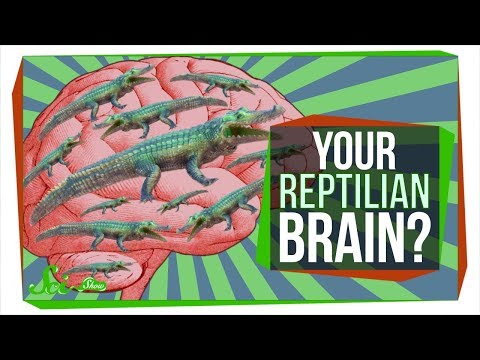
No, You Don't Have a "Reptilian Brain" - Duration: 6:00.

[ ♪ Intro ]

You might have come across articles like How to Make Friends Using Your Reptilian Brain

or Overcome Your Reptile Brain to Lose Weight.

And if they seemed to make a lot of sense…

Well, I'm sorry to be a spoilsport,

but the idea that humans have a primitive reptile brain deep down there somewhere is largely false.

It is based on a tiny bit of truth, though, which might explain why it's stuck around for half a century.

This 'reptile brain' nonsense started in the sixties when neuroscientist Paul MacLean proposed the Triune Brain Theory.

He was trying to explain how animal brains evolved and

why some animals, like us, could reason or plan but others couldn't.

MacLean thought that these more complex abilities came from extra brain layers added on top of a primitive, instinctive brain base,

like a juicy dumpling is wrapped inside a pastry.

The brain's core was called the protoreptilian complex.

Hence, "reptile brain".

And it's the name MacLean gave to what we now call the basal ganglia,

a group of neurons at the very centre of the brain.

As the name suggests, this region supposedly explained the behavior of reptiles.

MacLean thought it was the neural seat of motor control

as well as instinctual behaviors like defending territory.

Wrapped around the reptile brain was the paleomammalian complex or limbic system,

which was largely in charge of emotions.

And because emotions are important for things like social relationships, parental care, bonding and empathy,

MacLean thought this system was especially important to early mammals.

The final layer to be added on was what MacLean describes as the neomammalian complex, a.k.a. the neocortex,

which is the 6-layered tissue that makes up the majority of the folded,

"brainy"-looking part of our brains called the cerebral cortex.

This, which is much bigger in "higher" mammals like us and our primate relatives,

is what he thought gives us language, reason and conscious perception of the outside world.

And according to this theory, each of these layers acts as a separate quote "brain".

So when you get angry and lash out at a potential rival, that's your reptile brain taking over,

but when you ponder the great wonders of the world, your neomammalian brain is in charge.

Which is why some pop-psychology articles talk about reigning in your reptilian brain,

though that's not really what MacLean was going for.

In some ways, the Triune Brain Theory is kind of true, but it's also pretty wrong.

MacLean was kind of right that different parts of the brain have somewhat different tasks,

but his groupings weren't perfect.

Those quote "reptilian" basal ganglia do help us form habits,

and they play a big role in controlling voluntary movements.

But they're also involved in emotions and executive functions like self control.

For example one part, the nucleus accumbens, is a big player in the brain's reward circuit.

As for the limbic system, that paleomammalian part, it is heavily involved in emotion and bonding,

thanks largely to a structure called the amygdala.

But the term "limbic system" is kind of falling out of favor because neuroscientists

can't really agree what's actually in it.

Some neuroscientists consider the orbitofrontal cortex, the part of the brain that helps make decisions,

to be in the limbic system, too, because it's tightly connected to other parts of it.

Or they use a more encompassing term, the paralimbic system, instead.

Others just stick to functional networks within the entire cerebral cortex,

which includes both the limbic system and that neomammalian neocortex.

Speaking of which, MacLean was right that the neocortex is a big part of our reasoning, speech and cognitive abilities,

but as the majority of the cerebral cortex,

it's kind of got its fingers in all the neural pies.

And it's not required for intelligence.

Octopus can perform some really tricky cognitive tasks

like remembering how to get out of a maze without a shred of neocortex.

Also, MacLean's names for these so-called brains aren't great either

because they don't really have anything to do with the animals they're named after.

That 'reptile brain' didn't first appear in reptiles,

and the limbic system isn't unique to mammals.

In fact, most animals with backbones, including fish and amphibians, have basal ganglia and a limbic system.

And "lower" mammals like mice do have a neocortex.

There's even evidence that other animals have a neocortex of sorts.

Their brains contain the same types of cells as the ones in our neocortex,

they just aren't arranged in 6 layers.

That might explain how birds, which are actually reptiles, care for their young or have linguistic abilities.

What differs between brains isn't who has what so much as their relative size and shape.

And it's not even fair to say that these regions are most developed in those groups of animals.

While it's true that our neocortex is a lot bigger than a mouse's, even accounting for body size,

some of the structures in primate basal ganglia and limbic systems are also larger and more complex.

So they aren't just hold overs from our more primitive ancestors.

But perhaps the biggest problem with the Triune Brain Theory is the idea that these different "brains" work independently, or even linearly.

We don't have three separate brains, we have one big coordinated one.

Brain activity underlying a behavior may start in one specific area, but it'll soon spread as other parts help out,

an idea known as distributive processing.

And that's how that neocortex has its fingers in all the pies.

Let's say some really attractive person starts hitting on your partner, and that makes you livid.

Those feelings of rage might start with activity in the amygdala, a part of that "limbic system".

But then other parts of the cerebral cortex including neocortical areas

can either increase or decrease the probability that you'll flip out based on cues from the environment.

And the basal ganglia, particularly the nucleus accumbens,

play a key role in deciding what you actually do with all your anger

by integrating information from both the neocortex and the limbic system.

So your jealous rage isn't your territorial, protoreptilian complex taking control,

it's multiple parts of your brain working in concert.

To cut MacLean some slack though, his theory reflected the knowledge neuroscientists had at the time.

Like many scientific theories, it evolved and became outdated

as scientists got new information through neuroimaging and behavior studies.

So, although MacLean was on the right track in terms of understanding how brain structure relates to function,

he got a lot wrong when it comes to how those structures work together

and the evolution of animal brains.

And ultimately, that means you don't need to worry about trying to control your reptilian brain

because it doesn't exist!

Thanks for watching this episode of SciShow!

And if you like learning about brains and how they work,

you might want to check out our sister channel SciShow Psych.

And while reigning in your inner reptile might not be the way to keep your emotions in check,

you can learn more about how to actually do that in our Psych episode on controlling emotions.

[ ♪ Outro ]

For more infomation >> No, You Don't Have a "Reptilian Brain" - Duration: 6:00.

-------------------------------------------

AloeVeda App - Your Ayurvedic app right in your pocket (Indiegogo Video) - Duration: 4:13.

Hi, my name is Eloïse

I'm Ayurvedic Counselor and Therapist, as well as Yoga teacher

Hi, my name is Pedro.

I'm an Android developer, Yoga, and AcroYoga teacher.

We are here to present you simple funny

and supportive health app called AloeVeda

AloeVeda is your Ayurvedic Healer right in your phone

to help you to find health and balance in your life

Join us to understand how AloeVeda can help you

First, let me tell you the story of Stefan and his family

Stefan is 45 years old and works a lot

After work, To relax, he enjoys snacking and drinking while watching tv.

Sadly, he has hypertension and high cholesterol

His wife Eva is pregnant and wants to do the best for her baby

She reads a lot about natural approaches to Pregnancy and Baby care.

Their first daughter, Claudia just started university.

She has been suffering from skin problems for years and doesn't understand why.

Stephan's mother, Nora, really wants to play with her new grandchild

but for her it's painful to move too much because she suffers from arthritis.

Her husband, Joe has memory issues

and his problem is worsening day by day.

Like all of them, sometimes it's easy to get out of balance.

AloeVeda can help you with that!

It combines the ancient knowledge of Ayurveda for nowadays people

By the way, do you know what is Ayurveda?

It's the oldest natural medicine.

Imagine a great great grandma with a lot of wisdom

that just wants to take care of you and your health

Ayurveda was born in India around 5000 years ago to help people

And because it was so good at doing this

people spread its words and kept using it

It uses nutrition, lifestyle and herbs

the best natural tools to support health and longevity

With AloeVeda you can access all the Ayurvedic knowledge straight in your phone!

You have personalised programs with nutrition guidelines

explaining you what and how to eat

the best recommended food for you

and a meals planner to give you everyday the best meals to support you

Lifestyle recommendations to give you tips on how to balance your days

including morning and evening routines

The most suitable activities for you such as hiking, swimming or yoga

And suggestions for taking care of yourself through massage, scrub or skin mask

Herbs to heal you and help you to reach more balance

Some for cleansing, some for boosting or to regenerate you

and even for others special situations like acidity or constipation

Every day, in your page, AloeVeda takes care of reminding your personal daily homework

You just need to follow

Back to Stefan's family

Stefan started using the AloeVeda app, and after a test

AloeVeda recommended him a Hypertension program

He started changing his eating habits replacing junk snacks with fruits and other healthy food

and eating more greens and whole cooling grains

He joined a cycling group twice per week

and felt more connected to his body and mind

Stefan also took special herbs to take care of his heart and relax his mind.

Now after 3 months following this program

Stefan feels healthier, his tension improved

he feels less tired and stressed, more motivated and happier

Stephan was so pleased with his improvements that he started sharing AloeVeda with his family

Eva found a Pregnancy program, Claudia a skin program

Nora a program for joints and arthritis

and Joe a program for memory

Like Stephan family, we all are sometimes out of balance

AloeVeda helped them to reconnect to themself

and to find balance again. It can support you too!

To create AloeVeda we need you!

Please help us to create this great app by supporting AloeVeda project and by sharing it.

Thank you for watching and let's make this happen!

For more infomation >> AloeVeda App - Your Ayurvedic app right in your pocket (Indiegogo Video) - Duration: 4:13.

-------------------------------------------

Chunky Sneakers Trend - Duration: 7:13.

For more infomation >> Chunky Sneakers Trend - Duration: 7:13.
-------------------------------------------

Migrating Artifacts in Oracle Enterprise Data Management Cloud - Duration: 3:54.

In this tutorial, we'll show you how to migrate artifacts in

Oracle Enterprise Data Management Cloud.

You can migrate snapshots of artifacts across product environments.

Artifacts are organized into two Enterprise Data Management Cloud categories:

The Groups and Membership category contains Native Directory artifacts

such as users, groups, and roles.

The Enterprise Data Management category contains the artifacts

Repository Data and Data Grants.

Repository Data includes all data within the system such as applications,

data chains, enterprise data, and requests.

Data Grants contains permissions that associate users and groups

with the data they can access.

A snapshot is a compressed file archive of the selected artifacts.

Use migration, for example, to copy artifacts between test and production environments,

or to manage multiple Enterprise Data Management Cloud subscriptions.

To migrate a snapshot: First, in the source environment you export a migration snapshot.

Then, you download the snapshot to your local system.

Next, you upload the snapshot to the target environment.

Finally, you import the snapshot into the target environment.

Let's begin. I'll navigate to the Migration page.

You can see the two categories of artifacts here.

You can select which categories to export,

export all categories,

or select individual artifacts within a category.

I'll click Backup to select all categories and export.

When you export artifacts, a snapshot is created and stored in the cloud.

I'll name my snapshot demo_export.

The Migration Status Report displays the status of the migration process.

Depending on the size of the migration, it may take a few moments to complete.

You can close the Migration Status Report and return to it later.

To view the Migration Status Report, go to the Reports tab.

Now, let's go to the Snapshots tab. I'll refresh the list of snapshots.

Here's my migration snapshot.

Expand the snapshot folder to display the included categories.

Here are the Enterprise Data Management Cloud artifacts.

With the Actions menu, you can perform the following tasks:

Delete, download, repeat the export, rename the snapshot,

import artifacts using the snapshot, and view modifications.

I'll download a copy of my snapshot.

Now that the migration snapshot is stored locally,

you can upload it to your target environment.

Let's take a look at the contents of the snapshot.

The artifacts listed match the artifacts exported from the source system.

I'll import artifacts using the uploaded snapshot.

Refresh the page until the Migration Status displays as completed.

When finished, close the Migration Status Report, and return to the Home page.

Now you can start working with the artifacts you imported.

For example, these applications were imported from the Repository Data artifact.

In this tutorial, you saw how to migrate artifacts in Enterprise Data Management Cloud.

To learn more, visit cloud.oracle.com.

For more infomation >> Migrating Artifacts in Oracle Enterprise Data Management Cloud - Duration: 3:54.

-------------------------------------------

iMAGiNATiVe - We don't need any words - Duration: 4:26.

For more infomation >> iMAGiNATiVe - We don't need any words - Duration: 4:26.

-------------------------------------------

JOY MemoryCloud Warm Cool King Pillow - Duration: 6:22.

For more infomation >> JOY MemoryCloud Warm Cool King Pillow - Duration: 6:22.

-------------------------------------------

Me and The Better Half Play Fibrillation HD! - Duration: 39:19.

this is scary

i hate this feeling

im always scared of this

its when i begin to sweat

and get cold

and nervous

because when it hits

it hits hard

For more infomation >> Me and The Better Half Play Fibrillation HD! - Duration: 39:19.

-------------------------------------------

How to pin charts to your Azure dashboard | Azure Tips and Tricks - Duration: 1:14.

>> Find out how to customize and pin charts to

your Azure dashboard in

this edition of Azure Tips and Tricks.

There's so many different ways

that I could customize a dashboard

inside of my Azure portal.

Not only can I drag resources around,

but I can actually pin charts onto the dashboard itself.

So, I'm going to go into one of my resource groups,

and I'm going to select this applications inside

resource because I know it has

some charts in it that's really important to me.

So, here, I have this overview timeline chart that

showing me some server responses and page load times.

Now, lets say I want to see

this chart every time I come into the portal.

I want to click on this icon that's here on the right,

and then I'm going to hit "Pin to dashboard".

Now, my chart has been pinned to dashboard.

I'm going to hit "G + D", my shortcut

key to go back to the dashboard.

Now, you see my overview timeline is here in front.

Now, I want to drag this

over because I want this to be front and center.

So, I'm going to have this be like

the first thing that I see when I come into my dashboard.

I'm going to hit "Done editing", and here we go.

Now, every time I log into the portal,

this information is going to be

the first thing I see so I can

monitor and know what's actually

happening with my application.

Không có nhận xét nào:

Đăng nhận xét