From problematic papayas to not-so-sweet sugar that can hurt you, here are 10 foods you didn't
know were genetically-modified…
10.
Cotton Think cotton isn't a foodstuff?
Think again!
Sure you can't chow down on cotton balls but cotton seed has many other uses, including
cattle feed.
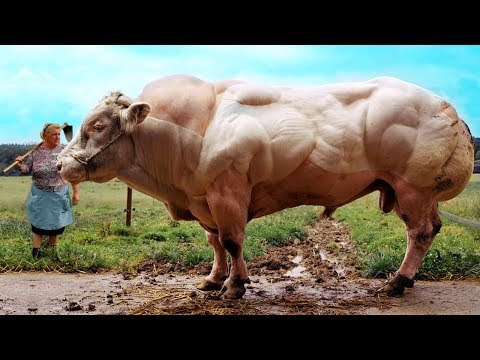
In fact these Belgian Blue cattle I'll mention soon probably have it for their dinner.
However use those seeds to make cotton seed oil and that goes into cooking for humans.
Cotton is one crop that's received the GM, or Genetically Modified, treatment.
By being engineered this way, it undergoes a complex process where it resists certain
herbicides and wipes out pests.
No wonder GM is popular if it turns cotton into a kind of crop-based superhero with special
powers!
While it sounds wonderful the reality brings you back down to earth… so to speak.
As said by Jeff Goldblum in Jurassic Park, "Life finds a way".
So in areas around the world where GM cotton was grown, pests adapted to the new conditions.
Also there was a reported health impact on farmers so the science part is still being
worked out.
9.
Dairy If you weren't already getting a little
bit uncomfortable, there are also GMO's (Or Genetically Modified Organisms) in dairy.
Actually it is a growth hormone that is injected into cows which in turn create more milk.
This practice is frowned upon around the world and is actually banned in most industrialized
countries because it poses many health risks to the animals and to humans.
But why is genetically-modified milk a bad thing?
Concerns have grown over the years over the notorious agrochemical company Monsanto.
They engineered what's known as a "recombinant bovine growth hormone".
That's a mouthful in more ways than one so it's abbreviated to 'rBGH' or 'rBST'.
The resulting milk reportedly contains unacceptable levels of the hormone IGF-1 which is said
to increase the risk of many different cancers.
Who knew milk could potentially be so dangerous, right?
It's not a wonderful experience for the cow either.
Aside from the factory farm conditions in some dairies that are a source of protest
anyway, a big problem is a possible link to mastitis.
That's where the udders become infected and it's bad news for us too because pus
can get in the milk supply.
Ugh…
The approval of rBGH in the United States is seen as very controversial and Monsanto
is plagued with toxic disasters, lawsuits, and coverups.
The rest of us get contaminated milk, the cows suffer, and we have no clue all of this
is going on.
Just say NO to drugs in your milk!
8.
Honey A genetically-modified bee population sounds
like something from a sci-fi movie but it's already happened people!
In 2014 a team in Germany were investigating honey bees but needed to take their research
to the next level.
So they developed a new type of insect.
Believe it or not, there's a lot we don't know about our stripy, stingy friends.
Sure there's a queen and they hang out in those hives in their thousands producing that
sweet, sweet honey.
But on the whole our knowledge is actually pretty vague in terms of how their little
minds work and we are just learning how smart they really are.
GMO is a major way of getting down to the nitty gritty and building a comprehensive
picture of bee society.
By messing around with their DNA, we could make new strains of bee that can fight infections
and overall be more productive.
Meaning they could resist these new strains of diseases and maybe even protect themselves
against invasive wasps.
And of course, make us some more honey!!
7.
Papaya Genetically-modified food is extremely controversial
and interfering with nature's way is always going to have detractors, putting it mildly.
However there is a major success story when it comes to GM and that's to do with the
papaya.
Let's go back to the 1940s for the beginning of a terrifying tale.
Well, a terrifying tale if you like papaya.
An affliction called the "papaya ringspot virus" appeared in Hawaii and its effects
spread across the world.
Those juicy, fragrant papayas were in danger of disappearing forever.
Thankfully science was there to lend a hand with the development of the 'rainbow papaya'.
This super dude of papayas fought off the virus and enabled the industry to continue.
So if you're against GM as a rule but love papayas you've got a moral dilemma on your
hands I guess.
6.
Potatoes The process is still in its infancy but genetic
modification is coming to the humble potato.
It's a versatile food that's given us so much from creamy potato salad to crispy
French Fries.
But this dirty little dude who comes out the ground isn't perfect and that's what scientists
are hoping to address with GM.
How about a potato that doesn't bruise or has a more attractive colour?
Tech known as RNAi, which basically involves interfering with genes and other things is
employed to make these refinements and the result is a potato called the White Russet.
This is the only example of a GM potato to date so we're not likely to see GM fries
anytime soon.
Of course if you did want to make fries with a White Russet it could be better for your
health.
It keeps its white colour when peeled and cut up and the main selling point is that
it produces lower levels of asparagine.
What's that?
It was first observed in asparagus juice and if you fry a regular potato it can become
carcinogenic which is bad news for your insides.
The Russet avoids that.
As a side note wait…who wants asparagus juice?
Is that a new thing that's good for you??
Maybe I missed something.
5.
Soy Beans We associate soy with healthy eating and an
alternative to things like dairy.
So it may surprise you to learn that most of the soybeans in the US are GMOs, Genetically
Modified Organisms.
They're grown this way to make them tougher against herbicides which makes sense but is
also controversial.
Scientists have made a possible connection between this type of soy and liver problems,
as well as fertility and even infant deaths.
This is based on tests conducted on hamsters, not humans but is pretty worrying, right?
Especially for those poor hamsters.
Plus being able to fight off chemicals isn't always a good thing.
It means the chemicals stay on the beans and that goes into your system when you eat them.
It's not like soy isn't in a whole load of stuff we consume either.
Not only is it in animal feed but it's also in bread, cereal and even meat…Soy can be
everywhere!
4.
Sugar Another popular ingredient in all types of
food is sugar.
And much of US sugar is subject to genetic modification.
Monsanto - that company again! - created a sugar beet in 2005 that was resistant against
its own weed killer.
Now this caused a lot of concern as reportedly GMO products are not sufficiently tested and
authorities are apparently not that worried about letting Monsanto release their sugar
beet for general consumption.
It all appears to be a done deal which is frightening if there are any health risks
because sugar is in everything!
As we've mentioned before the best way to handle this situation is to educate yourself
and ask important questions.
Do we need GMOs to play God and protect nature against diseases and wipeouts?
Are we comfortable with big companies seemingly not being accountable?
On the flipside are GMOs really as bad as people think?
Question everything, especially if you're putting it in your mouth, right?
3.
Tobacco We know what you're thinking.
Tobacco?
Don't you smoke it rather than eat it?
Well yeah you smoke tobacco, but it can also be used as an ingredient in cooking.
Plus you can chew it, though we're not sure who does that anymore.
Sounds like something an old timey cowboy would do, huh?
Also what do you think you're doing when you take tobacco smoke into your lungs?
Your body absorbs what's in the plant the way your stomach takes in food.
Anyway the point is tobacco makes an interesting addition to this list because of the high
GM content that goes into its production.
Even though I say interesting, I actually mean unsettling.
Because of the nicotine naturally but also the other things inside that brown, crinkly
stuff.
A reported 90% of tobacco is produced using GMOs.
That means while the GM tobacco is resistant to bugs it also contains around 4,000 chemicals
which are used for pesticides and herbicides.
These noxious substances are what you crave when waiting for your next death stick!
So if you've been thinking of quitting smoking, or chewing or whatever it is you do, then
now's the time to bite the bullet and stop, right?
2.
Yeast Yeast is a key element of bread production
and beer and wine fermentation.
Genetic tinkering has become a part of yeast production also as with lots of other foods.
However this could be a good thing as a super yeast has the potential to make that alcohol
healthier… and best of all may reduce hangovers!
This new GM yeast can boost the health benefits of wine.
Thing is, yeast is a tough nut to crack, with scientists developing intricate ways of altering
genes to boost the amount of things like resveratrol.
Resveratrol is a compound found in red wine which acts as an antioxidant and anti-inflammatory.
These studies can help us learn which bits of DNA are responsible for what taste.
That doesn't mean you should go out and drink more wine by the way.
But you can if you want to!
1.
Beef What's a good way of getting more meat from
a poor, unsuspecting cow?
Breeding a super cow of course!
If you haven't seen Belgian Blue or Piedmontese cattle before then prepare to be shocked.
These animals have got more bulging biceps than a hug between Arnold Schwarzenegger & Sylvester
Stallone!!
The idea is that by utilizing the breeds' increased muscle mass, known as "double
muscling", you obtain more high quality meat.
Sinister for sure, but delicious, which is why the Belgian Blue for example has been
farmed for over 100 years.
Because of a genetic mutation, the cow inhibits the flow of myostatin, which is a growth hormone
to do with muscle fibres.
A lack of myostatin leads to more fibres and some pretty big bovines!
Note that I said "genetic mutation".
The double muscling is a combo of natural development and selective breeding by enterprising
farmers that's been taking place since the food shortages of World War II.
There's no genetic modification involved in an official sense, though it is tempting
to look at these cows in a crazy sci-fi type of way.
Thanks for watching!
Are there any surprise GM foods we left off the list?
Let us know in the comments!
Be sure to subscribe and see you soon…

 For more infomation >> Semiotics | Wikipedia audio article - Duration: 50:23.



Không có nhận xét nào:
Đăng nhận xét