Thứ Hai, 4 tháng 2, 2019

Waching daily Feb 4 2019

Hello guys!

Today I will show you how to get free gems and passes for your episode interactive account 2019.

Just watching and follow the simple instructions

Ok, let's start the party!

First, copy your Support ID

Open your browser and visit myepisodegems.online

Paste your Support ID

Choose your gems and click generate

Please stay tune for a moment

Please stay tune for a moment …

Please stay tune for a moment

Please stay tune for a moment …

Please stay tune for a moment …

Click Next!

To verify if you are not bot, please choose and install one apps

All the applications are safe. Choose one which you like. You can delete it later.

For the installation I will speed up this video

After finish installation, open and run app for 20 ~ 30 second to receive your gems

Open your Epiosode Interactive and check your gems.

Have fun guys!

For more infomation >> How to Get Passes & Gems 🔥Episode Choose Your Story 2019 🔥iOS/Android - Duration: 6:28.

-------------------------------------------

Are You Ready for a Crash Course in Digital Marketing? - Duration: 1:00.

For more infomation >> Are You Ready for a Crash Course in Digital Marketing? - Duration: 1:00.

-------------------------------------------

The Mastin Kipp Podcast - The Reason Why You Feel Like A Fraud - Duration: 12:42.

I wanna talk a little bit about this.

Imposter syndrome.

So we have a couple mental health professionals on our team,

and we were discussing this workshop series,

and they both said today or yesterday,

you know, Mastin, a lot of people in the Facebook group

are talking about Imposter syndrome,

either directly or indirectly.

Does anyone relate to this term?

Let me see by show of hands.

Of course they can.

She said, can I tell you what it is?

Yes.

So, we're gonna talk about it literally right now.

Next slide.

People with Imposter syndrome have trouble accepting praise

and internalizing their success,

and they view their success as due to luck

or external factors.

Not because of their own skills.

Is that good?

Okay.

Yeah, okay yeah.

Yeah, so usually when I bring up a concept,

I'll define it, typically.

So we're all on the same page.

And so I want to talk about this,

because this shit shows up in career transition.

Oh!

It shows up big time, okay?

Career transition and/or starting your business

is the same type of idea.

And so basically, with Imposter syndrome,

we anticipate rejection and/or isolation

in all future relationships.

Which means that no matter what you do now,

in the future, you're going to be abandoned or rejected

because of your history.

And that's informed on by your attachment style

to your primary attachment figure.

So here's what happens:

Oh my God, I'm not gonna be good enough,

this is gonna be too complicated,

it's not gonna work, I'm not gonna pull it off,

I need to start another certification, whatever,

and I stress out, why?

Because I'm anticipating rejection

unless I have this impossible goal: being perfect.

If I'm perfect, then I won't get rejected,

which is based on our history.

And so Imposter syndrome, we view it

from our perspective as an opportunity

to heal attachment patterns.

So if you're like, I feel like a fraud,

code for time to heal.

And what's interesting is, there's a high degree

of correlation between Imposter syndrome

and people who have a traumatic history

and/or marginalization in their history.

And that's a lot of our crowd, right?

So if you have a traumatic history,

or if you're a minority,

and you're around a bunch of privileged people,

you're gonna have a systemic Imposter syndrome, typically.

Now not everyone has that,

but if you look at the studies,

it's way higher in marginalized groups,

in women, and in people who have traumatic histories

than anybody else, because those are people

who tend to get, what?

Rejected or avoided, and not get their needs met.

Who follows?

This makes sense?

What?

And traumatized, that's right.

And so that's why it's so high,

but it's also super high in achievers

who have those histories.

Does that resonate with anybody in the room?

All of us, for the most part.

So there's this fancy slide,

this is called the Imposter cycle.

Don't write it down, okay?

And here's what happens.

So there's this anxiety and worry

over some type of achievement-related task.

I'm gonna sign up for this course,

I'm gonna go do a Facebook live,

I'm gonna start a business,

I'm gonna transition a career,

and all of a sudden there's anxiety, ahhh!

And worry and self-doubt.

I can't do it, I'm not gonna be enough,

they're gonna discover me, I'm gonna be a fraud,

and usually one of two things happens.

There's either over-preparation,

where you're like, I'm gonna do this shit

and I'm gonna figure all this shit out

'cause I'm gonna get it perfect, right?

Which is good for maybe grades, right?

Or there's my take, I do the other side, procrastination.

Nah, I'll do it the last week of the semester.

Anyone do college like that?

I never understood the over-prepared people.

Like why are you doing all this work so far in advance?

You only need like the last two weeks of November

to do it, right?

At the end of the semester.

That was what my plan was, just like, whatever.

Until, (imitates explosion).

Right?

That's how I did college.

I was getting A's in college.

By the way, I dropped out of college

because I got my dream job, not because I flunked out.

But I was always the procrastinator,

and also, I tend to be more responsive anyway

because I'm not wired for executive function skills

automatically, I'm more wired for reactivity.

But in a sense, you see these two things,

either being over-prepared, like 99...

Think about it for your business, right?

I'm 99% ready.

I need one more study, I need one more certification,

I need one more piece of information,

to know that this time I'm gonna get it perfect.

And you wonder why you have anxiety.

Or, I'll do the next one.

And here's what happens:

if there's an accomplishment

because of procrastination or over-preparation,

there is temporarily a feeling of relief.

They're like, I did it!

However, if there's over-preparation,

they don't say because I have a skill.

They say well, 'cause I worked so hard,

it's more about some external thing.

If there's procrastination, it was luck.

It just kinda came together.

And what happens is, there is positive feedback,

but they discount the positive feedback.

Because they say oh, I just worked hard.

It's not me, I just worked hard, or it was luck.

Some version of that.

And then what happens is,

that's when they're perceived as a fraud by themselves,

meaning they're not perfect.

They can't get the approval, they up.

Because there's always the next level they can't get to.

Because there's an impossible standard

based on their attachment style

they think they have to get to

in order to get the approval and love.

And then, they go to the next task,

and around and around and around we go, right?

And so, I wanted to share this with you guys

because this is usually something I would teach

inside a program, but because so many people

were talking about this, overtly or intentionally,

I wanted to help you understand.

There's no amount of over-preparation

that will prepare you for the entrepreneurial journey.

You guys just jump.

(laughs)

And you're gonna it up,

and it's not gonna be perfect,

and here's the thing, is that the coaching program

and what we do is, we're gonna help you learn

how to self-regulate and create those secure attachments,

because we're gonna also model that.

That's what we're all about, okay?

So you may not get that with your peer group,

or your family of origin,

but that's what this whole group is all about.

And it's what we're about, it's what our program is about,

it's what our team is about, it's what I'm about.

There's no metric that, when you get to this place,

you're enough.

It's like, you leaped, holy shit!

That's enough.

And also, for the people who are procrastinators,

you want to know when most people sign up for a course?

Last day.

I want to know who these people are.

Like who are the people at 11:55,

they got their credit card out,

and they're like,

(grunting)

Okay, go!

You know, like who are those people?

I wish I could film it all, you know?

And so the goal here is, is that in business,

you gotta get beyond this to realize

that when we have a secure attachment,

Imposter syndrome and a secure attachment can't coexist.

You can fluctuate between the two,

but the idea is, is that with a secure attachment

you're gonna mess it up, but you can come back on track,

like we talked about in the last workshop.

Who follows?

Does this make sense?

Is this helpful guys, by the way?

Okay cool, and by the way,

you'll get this in the slides, okay?

Now, some things that trigger Imposter syndrome.

So excited for this one.

Okay, any time you learn a new skill.

Any time.

Anybody learning a new skill?

Okay, probably getting triggered.

Okay.

Increasingly complex tasks.

When you do harder shit,

you're like, aw, I can't do it.

I'm not enough.

I gotta do it perfectly the first time!

Versus, alright, let's go fuck this one up a bunch

'til we get it right, which is basically my approach.

Also, when you have decreased contact

with peer or family support networks.

And what starts to happen is you become,

and especially in an entrepreneurial skill set,

it's harder to identify with people

that you're used to identifying with.

They're not bad people.

They just don't know how, necessarily,

to relate to you in this new effort

unless you train them to encourage you

whether or not they agree with you, right?

It's hard.

(laughs)

That would be a whole other course, right?

But the idea is, is that,

it's sort of lonely as an entrepreneur,

and one of the things that's hard to talk about

is there are a lot of mental health correlations,

decrease in mental health associated with entrepreneurship,

because it's so isolating.

But it's another reason why we do it socially in cohorts,

is because we want to decrease isolation at all costs.

Who follows?

This makes sense?

And so we know that you're gonna have a decreased contact

probably with certain peer groups or family groups,

as you build your business,

which is why we built this group

so that you can have an attachment.

And it's not us versus them,

because what's gonna happen usually

is people come to us for business advice,

they work out their attachment shit,

and their family dynamics and relationships change,

and they're like, holy shit I didn't realize that.

But how you do one thing is how you do everything.

Who follows?

And so what happens is, they come in all disorganized,

anxious, and avoidant, but they come out relatively secure.

And then that sometimes, a lot of times,

impacts the rest of their family ecosystem too.

So it's almost like, you have a healthy cell,

and there's this kind of cancerous dynamic,

and then one kind of comes over, gets healthy,

and brings it back, and then everything gets healthy,

usually over time.

Who follows?

And so you gotta kind of disconnect from the pattern

to reconnect to it, which is so difficult.

Also, being surrounded by people ahead of you.

When you're surrounded by people

who are better skilled than you are,

oh my God, I could never do that, they're so amazing.

Right?

Versus, holy shit, I'm gonna learn from that person.

I could never do intervention the way Tony Robbins does.

Never could.

But you better believe I watched him do intervention

for hours and hours.

I would go to his seminars just to watch interventions.

And I would watch the audience, and take it all in,

and okay, what's he doing there?

And I'd figure it out, I'd get his programs,

and I'd reverse engineer how he did shit.

Bless you.

And then I would just go do it,

tell people I don't really know what I'm doing,

is that okay?

And they said, okay.

And over time, with practice,

I started making my own distinctions.

And I haven't taken in any of his work

in probably six or seven years,

because I'm trying to have original thought.

But there's a lot of original seeds of what I do

based on that work, and when you're around someone

who is way better at something than you are,

and you have any type of Imposter syndrome,

oh my God.

You're gonna miss the opportunity to learn

because you're too busy comparing yourself.

Who follows?

Versus like, I'm in the presence of someone

who's a badass, I'ma learn.

Because Tony is very obvious in when he says this,

success leaves clues!

Right?

When you're in the presence of someone who's a badass,

study them.

Study them.

Don't be intimidated by them, just study them.

'Cause they just have a skill set, okay?

And attachment-focused activity.

I'm sorry, achievement.

(laughs)

Achievement-focused activities.

Meaning, anything where you have to achieve some shit,

chances are Imposter syndrome's gonna come up

because all of these things get down to approval.

Big breath right there.

So think about this.

As you're starting to build your entrepreneurial skill set,

if Imposter syndrome's showing up,

you can celebrate and say, oh my God,

I really just want some love right now,

and I think that I have to be perfect to get it.

Wow.

Guys, I'm having a hard time.

In which case, you can get your needs met

through self disclosure in a safe group,

and start to realize that, if this is coming up

it's an opportunity to heal.

It's not a reason not to move forward.

Because you're always...

If you have Imposter syndrome,

do the shit that makes you gonna feel like a fraud.

If you're gonna feel like a fraud, do that shit.

Because I have a name for my fraud.

I call him Rod.

(audience laughs)

Rod the fraud.

And he's in there, he's like, are you sure?

These people are gonna find out who you really are.

Right?

And what's interesting about that

is when you look at Imposter syndrome,

there's also this fraud thing.

People who are actually frauds don't have that, okay?

Because they're sociopaths, okay?

So they don't have that.

They're like, I don't care, it's fine.

I'm justifying it because of this, right?

So people who have this worry about being a fraud thing,

you also have integrity.

Meaning you want to take good care of people

and you're worried that maybe you can't.

Because in the past, someone didn't meet your needs.

Who follows?

But that's not the case, okay?

So I want to be very clear about that.

So is that helpful?

Okay, cool.

I wasn't in the original slides,

but I added them as a response

to what we were seeing in the Facebook group.

(upbeat music)

For more infomation >> The Mastin Kipp Podcast - The Reason Why You Feel Like A Fraud - Duration: 12:42.

-------------------------------------------

Shining New Light – Dr. Trushar Patel (University of Lethbridge) - Duration: 2:45.

For more infomation >> Shining New Light – Dr. Trushar Patel (University of Lethbridge) - Duration: 2:45.

-------------------------------------------

Polite Spam: Why It's KILLING Your Channel! - Duration: 5:03.

Hey guys it's Persona here, and welcome back to another video.

So this video should be relatively short, as it's a small problem that I've encountered

in the YouTube community, and why this could present a problem to your channel.

So just getting straight to the point, the problem is what I call polite spam, which

is basically bots in your comment section but many people think these are actual people

and are in turn giving them views, subscribers, and so on.

These bots are no different than a bad tactic called sub for sub, where both individuals

tell the other to subscribe to them and hopefully have them watch their content and stay active,

which almost never works, and you're just hurting yourself.

Trust me, I sub for subbed on my former channel and it gave me so many issues, just don't

do it and if you want to actually want to grow just be sure to focus on quality and

consistenly uploading.

Anyways getting back to the topic, these bot commenters try to evade getting their comment

moved into your spam section so they try to make themselves seem super genuine when they're

fake and just want to promote themselves and in reality want nothing to do with you and

your videos.

Now several people have made videos addressing bots commenting on their video, but all you

really need to know is that they try to avoid being detected by YouTube's detection system

by usually commenting something positive about you or your video, they actually fully address

your channel name in the comment, like a normal person would just abbreviate your name or

maybe not even use it, I mean take me for instance, I renamed my channel to a genuine

name that personally makes sense to me and yet the bot still says the whole thing, they

usually have over a thousand subscribers, and then finally either state you should go

to their channel and check them out directly or imply it.

How do you know if they're implying you should check them out?

If they over exaggerate like using emojis or exclamation marks, yeah they are, if they

refer to themselves like saying "I" or "my" and if any of these things that I

just said seem to happen, then it's pretty obvious they have an agenda and don't care

about your channel, your content, your videos, and so on.

These bots are companies or garbage users in disguise that want to suck you in to watch

them, basically they'll say hey, your video was great, check me out and based on the amount

of views and subscribers they have it seems to work, but in the long run you won't get

any views because you tried to promote yourself instead of getting people to naturally come

to your videos based on personal interest, like if a person says hey check me out, sure

I'll show courtesy and check them out but after that I'll decide whether or not I'll

stay since I didn't choose naturally to watch their content, they wanted me to.

If they have a bot that's telling me to check them out, then I'm definitely not

going to watch them for obvious reasons.

Ok, now that we've pretty much identified what these bots will do, let's talk about

several ways to address this.

Let's get one thing straight, these aren't people that actually enjoy your video, and

I think this is the new sub for sub going on in YouTube, it's just more subtle and

you can't really notice it.

Obviously, you can ignore them like they didn't even comment, delete their comment, give them

a heart and reply which is what I personally do because I do that with everyone just as

long as the comment isn't toxic, and they aren't being offensive but I'm not giving

them anything like views or what they want.

Now deleting their comments doesn't help because you don't get increased retention

on your videos, but leaving them up doesn't either because people can go check them out

through your video and they steal your thunder.

Personally, several of my friends have told me to just leave the comments up and deleting

them shows your insecure and isn't going to fix anything in the long run.

The best way is to just leave them there and to just ignore them.

Now I want to show you guys what these bots act like, and how I think they work.

Basically, whatever your videos genre is, gaming, vlogs, piano covers, whatever, these

bots will specifically detect the title and tags, search up those videos programmed by

their company or user, and then leave the comment.

How you know these are bots depend on the content mostly, so if you did piano covers

let's say, you'll have a piano cover channel automatically comment something, a big red

flag.

Oh yeah, and if these bots comment something like instantly or shortly after you put a

video up, then you can also find out that way.

So this has happened to me a lot in the past, like I'll post a guitar cover, and immediately

following that several guitar channels will be like oh hey nice, check me out, I mean

unless the person really has enough time to do that with so many smaller channels, it's

a bot.

I posted a guitar cover yesterday, and immediately I had a music bot comment, this bot works

with a company that has over a thousand subs but not even equal to that count in terms

of views, and it's super easy for me to detect bots because I can make several different

types of content based on my talents and therefore find out who's real and who's fake.

Another example is the nightcore video I made on Hammer To Fall by Queen, I think it's

an awesome song, but right after I posted it a nightcore bot left a comment and several

other nightcore fans subscribed and said the video was good.

Shifting the subject a little bit, I don't even make nightcore videos but that video

apparently got more views than actual nightcore channels that are smaller, I don't make

nightcore videos as a content but these bots still find me and not a nightcore channel

with say 10 subscribers.

These bots are so subtle and are programmed by their companies or users to show up here

and there so people won't notice them, all I have to say is don't fall for it because

these people don't care about you and they just want to promote themselves and take it

from me, a guy who has literally killed his former channel by subbing for subbing, having

people say they subscribed to you only for you to subscribe back and increase their numbers

and statistics but neither of you staying active on the others channel, both of you

gaining literally nothing from it and only wasting your time, and I feel that these bots

are just another way people and companies try to sub for sub.

I mean these bots are so easy to get, you can buy them on the internet for said price

and it's done, and because YouTube has changed the monetization system, and people think

these bots are the best way to grow when they're only hurting themselves.

The internet can be a great tool or a detrimental one, and how you decide to use it and respond

to it is crucial.

You know when you make a channel, upload videos, find your niche and talent, even sub for sub,

it's a learning experience.

I learned that you can't buy your way to happiness and success, you have to earn it

through hard work and time and dedication.

So yeah, that's all I had to say, I had to get this off my chest because it is a problem

and people are falling for this scam.

If you're smart and can recognize what's going on with your videos, this problem shouldn't

even exist as you can just ignore those bots or delete their comments.

Thank you guys so much for watching, if you enjoyed, please leave a like, comment like

an actual person, share this around, and as always, have a good one.

For more infomation >> Polite Spam: Why It's KILLING Your Channel! - Duration: 5:03.

-------------------------------------------

Creativation 2019 Foil Quill from We R Memory Keepers - Duration: 5:35.

Hey, guys, it's Jess from Mad in Crafts!

There are always tons of great new products that debut at Creativation every year, but

the standout product this year was the Foil Quill from We R Memory Keepers.

And I'll let the representative from We R Memory Keepers tell you more about it.

ALLIE: Hey!

I'm Allie here at the We R Memory Keepers booth and I'm going to tell you all about

our new Foil Quill.

It's a heat transfer pen.

It's an attachment that goes into your machine where your blade or your pen would go, and

it heats up and it transfers foil onto your materials.

And absolutely beautiful results come from it.

So let's take a look at how this works.

Normally you would use your cutting mat, put your material down, then you would put the

foil on top and tape it down with our placement tape to hold it in place.

But for the demo I'm going to be using this magnetic board just because it makes it a

little easier.

So I am putting my paper down, my foil on top...

I feel like that's two...

No, that's not two.

Okay, good.

Foil on top, and then I'm just going to put these magnets to hold it in place.

It's a little faster than taping.

And you're going to want to make sure your foil is nice and smooth when you put it through

your machine.

Oops.

Not like that.

Alright.

ME: Now this is something that We R Memory Keepers....

ALLIE: ...we are working on, yes.

We are developing for the future a magnetic mat that has the grids on it.

Just to make it easier if you are doing 50 party invitations, you don't want to use that

much tape.

We're just going to try to make it a little easier for you with the magnetic mat but that's

coming soon.

Now we're going to just place this in our machine and load it up.

ME: And there's the little attachment, right?

ALLIE: There's the little attachment, and it's USB powered so you can attach it to the USB port

on your machine.

If it doesn't have one, you can use a power bank, an iPad, a laptop, whatever USB power

source you want.

This is going to work with Brother machines, with Eclipse machines, Silhouette, and Cricut.

And you can use your own SVG files that you already have, works with SVG files.

Or we've got 6 different thumb drives chock full of 250 designs.

We've got holiday designs, generic designs.

We have designs from Heidi Swapp, Kelly Creates, Amy Tan and Paige Evans.

And so you can do the same thing you can do with your cutting machine if you have a pen

feature or a sketch feature.

If you don't we just insert it where the blade goes.

It's basically just drawing over the foil and heat transfering it onto the material.

It comes in an all-in-one kit because there are three different sized tips: small, standard,

and bold.

And this one comes with all three sizes, plus the adapters you need for all the different

cutting machines, and some placement tape, as well as three colors of foil.

And that retails for $99.

Or you can buy each of the tips separately in a kit that has all of the adapters you

need for $39.

This is a better deal, though, because you are saving about 20 bucks.

Plus, you have a lot of different options.

But basically, for 40 bucks you can turn your cutting machine into a foiling machine which

is pretty cool.

We are really excited with the reaction we are getting.

This is the New Product Award that we were honored to win at the beginning of the show.

So we are glad everyone is as excited as we are about the Foil Quill.

So, let's take a look at the magic here.

That's a beautiful foil transfer, and that is not going anywhere.

That's not coming off.

It's a nice heat set transfer.

This is your standard tip.

Down here you can see the bold tip.

And then here's the fine tip over here for more intricate designs.

This is a lovely wedding invitation.

If you have SVG files that are layered, that cut different layers that you can layer on

top of each other, you can do multiple color designs with different colored foil as well.

So there's a lot of creative possibilities.

ME: So this not only works with the different cutting machines, but it works with the software

for them.

ALLIE: Yep, absolutely.

ME: And, is paper the only application that you can use?

ALLIE: That is a good question.

We've tested it extensively on a lot of different materials.

This is a ribbon.

You can do some fabrics, some kinds of leather.

We've done thin wood, chipboard, vinyl.

So if you like to cut vinyl decals, you can foil them, which is really cool.

We've done acetate.

We've done, did I say wood, thin wood?

So a lot of different materials that you can transfer your foil onto.

ME: And the heat element doesn't affect the wood or the vinyl or the acetate?

ALLIE: No.

ME: That's amazing.

ALLIE: Yeah.

ME: Thank you so much!

That's beautiful.

ALLIE: Isn't that pretty?

You can make your first place ribbon, right?

ME: Pretty awesome, right?

You can see why it was the talk of the show floor.

The only thing that I will warn you about is, I don't believe this tool has been santioned

by any of the cutting machines.

In fact, I know for sure Cricut has said using third-party adapters will void the warranty

on your machine.

So have to decide if the really cool effects you can get with this new tool are worth voiding

your warranty.

But it's definitely something to keep your eye on for 2019.

Alright, give this video a thumbs up, if you learned something new.

Subscribe to my channel, if you aren't already.

Hit the notification bell, so you don't miss any of my new videos.

Visit me on my blog madincraft.com, and thanks so much for watching!

Bye!

For more infomation >> Creativation 2019 Foil Quill from We R Memory Keepers - Duration: 5:35.

-------------------------------------------

Live with Lisa Fischer: Jazzercise of Conway, Part 1 - Duration: 2:31.

For more infomation >> Live with Lisa Fischer: Jazzercise of Conway, Part 1 - Duration: 2:31.

-------------------------------------------

Earthquake Insurance: How Prepared Are You? - Duration: 3:46.

For more infomation >> Earthquake Insurance: How Prepared Are You? - Duration: 3:46.

-------------------------------------------

You Make Me Happy, You Are My Sunshine (Sing with Ben) | Nursery Rhymes and Kids Songs - Duration: 4:42.

You Are My Sunshine

My Only Sunshine

You Make Me Happy

When Skies Are Gray

You'll Never Know Dear,

How Much I Love You

Please Don't Take My Sunshine Away!

The Other Night, Dear,

As I Lay Sleeping

I Dreamed I Held You In My Arms

But When I Awoke, Dear

I Was Mistaken

So I Hung My Head And I Cried!

You Are My Sunshine

My Only Sunshine

You Make Me Happy When Skies Are Gray

You'll Never Know Dear,

How Much I Love You

Please Don't Take My Sunshine Away!

The Other Night, Dear

As I Lay Sleeping

I Dreamed I Held You In My Arms

But When I Awoke, Dear

I Was Mistaken

So I Hung My Head And I Cried!

For more infomation >> You Make Me Happy, You Are My Sunshine (Sing with Ben) | Nursery Rhymes and Kids Songs - Duration: 4:42.

-------------------------------------------

Sleep Cleans The Brain - Duration: 5:27.

Welcome to another JeaKen Video.

Before watching the video ,don't forget to subscribe to our channel by clicking the subscribe

button below and clicking the bell icon to be notified whenever we publish a new video.

Sleep Cleans The Brain

Have you ever wondered why you need to sleep (and not just because you know you have to

in order to survive), but really ever wondered the real 'why'?

If asked why we do, most of us wouldn't be able to give the correct answer, in regards

to the importance of sleep and how it impacts brain health.

Your Brain Cleans Itself While You Sleep

During sleep, your brain cleans out all the toxins that have accumulated while you're

awake.

The cellular structure of the brain changes during sleep.

One study published showed that the brain cells shrink during sleep, creating gaps between

the tissues, allowing the neurological waste to be passed out and flushed away.

This waste removal system of the brain is what experts refer to as the glymphatic system.

This glymphatic system has been found to be ten times more active when a person is sleeping.

The brain flushes the waste through its cerebrospinal fluid.

The same fluid is responsible for bringing in nutrients to the brain.

Getting Enough Sleep Lowers Your Risk of Alzheimer's

This cleaning process does more than get rid of toxins.

Another important reason to get plenty of sleep is to enable the brain to flush out

beta-amyloid proteins.

If your brain is healthy these proteins are flushed out easily, however, if it isn't healthy,

these beta-amyloids can accumulate as sticky plaque and cause problems.

The plaque has been found in larger amounts in patients diagnosed with Alzheimer's.

If you don't get enough sleep, your brain cannot do its cleaning process which can result

in the accumulation of neurotoxins such as beta-amyloid proteins.

More Beta-Amyloid Problems

Another study was aimed at determining how sleep can help prevent the onset of memory

impairment.

One of the findings suggested that the beta-amyloids played a role in preventing a person from

getting enough sleep.

This in turn triggered the onset of chronic sleep deprivation.

Neuroscientist Matthew Walker, one of the experts involved in the study, found that

having an increase of beta amyloids in the brain led to the increased likelihood of not

being able to achieve deep sleep.

It also impacted on memory.

Unfortunately, the less sleep you get, the less capable your brain is in cleaning out

the beta-amyloids, and the vicious cycle begins where your brain health can begin to deteriorate.

Bedtime Habits that Harm Your Brain

Neuroscience experts suggest that people pay better attention to their sleep hygiene.

Factors such as diet and exercise are certainly important for enabling the body to get enough

sleep.

However, there are other, more specific, bad habits that can hinder quality sleep.

For example, sleeping with a smartphone close to your head adversely affects certain patterns

of the brain.

Smartphones emit signals that have the capability of adversely restructuring brain cells and

preventing the process of cleaning out neurotoxins.

The electrical radiation that is emitted from smartphones and other mobile devices is picked

up by the brain.

Although scientists are still trying to determine just how much damage wi-fi gadgets are causing

to the brain, it's safe to say that removing them from close proximity is a good habit

to get into.

In doing so, you are giving your brain the chance to clean itself, and also getting quality

sleep that is essential to physical health too.

Sleep, Even If You Don't Feel Sleepy

Quite often you'll hear people say how they don't need a lot of sleep, yet they are still

capable of doing what is required of them.

Unfortunately, even if a person does not feel sleepy, they need to go to sleep!

The brain needs at least 6 to 8 hours of sleep each night for it to be able to get rid of

the neurotoxins.

Plus, whether a person believes it or not, a well-rested brain is far more capable of

performing optimally than one that is sleep deprived.

If getting enough sleep at night is a challenge for you, take the time for a 20-minute nap

during the day.

Taking a nap is like recharging your smartphone battery.

It boosts your brain's memory and learning capacity.

For people who are able to nap for an hour or even 1.5 hours, they are able to help their

brain build new connections, which translates to improved creativity.

Although many people would like to believe that the brain has unlimited powers, research

suggests otherwise.

Experts have found that the brain has limitations.

For example, it cannot perform its daily tasks while doing its housekeeping.

It either needs to work or clean.

Therefore, if you want to keep a healthy, clean brain, let it do its job when it needs

to and go and get some sleep!

If you've liked the video give it a thumb up, leave a comment and share with your friends.

We Thank You So Much For Watching.

For More Nutrition, Health And Beauty Tips, Please Subscribe To Our Channel

For more infomation >> Sleep Cleans The Brain - Duration: 5:27.

-------------------------------------------

Does Depression Make You More Realistic? - Duration: 5:39.

[INTRO ♪]

I think I'm above average in a lot of ways—

I'm a better driver than most.

I'm pretty, like, hilarious, for example. Right?

But that just can't possibly be true of everyone who thinks so.

In fact, psychologists have shown that humans tend to be a little bit mistaken about themselves—usually they think that they're a bit better at things than they actually are.

But some people with depression are less likely to have this bias.

And for a long time, that fueled the idea that people with depression were more accurate judges of reality—a concept dubbed depressive realism.

In popular media, it's been used to claim that people with depression don't have a negative worldview, they're just more objective and 'see the world as it really is'.

But as psychologists looked further into this idea, it's become clear that depressed people aren't necessarily more realistic or objective in their assessments of things.

The phenomenon only happens under certain circumstances—ones where people who aren't depressed are generally positively-biased.

Depressive realism was first proposed in the late 1970s when researchers had 96 students try to guess whether a button they could press controlled a green light.

People who self-reported fewer symptoms of depression rated themselves as having more control over the light than they actually did, while those who reported more symptoms were more spot-on.

And since then, a lot of other research has found similar results.

For example, a 1987 study had 80 people pair up and have brief conversations.

Then, afterward, they had each person rate their own social competence.

The conversations were also viewed by outside observers, and it turned out the self-ratings from the people with depression were closer to the ratings of these observers, while everyone else rated themselves much higher.

And that's a pretty common thing people do.

Basically, we look at ourselves and our abilities with rose colored glasses.

But pulling off those glasses doesn't necessarily mean people with depression are actually seeing the world more objectively.

Lots of studies also support the cognitive distortion model.

That's the idea that depression distorts reality, so that people view themselves and their future prospects more negatively than they actually are.

You can see this in a study that gave 19 depressed patients and 12 without depression an identical sheet of feedback about a conversation they'd had.

Both groups thought the feedback was equally accurate, but a few minutes later, the group with depression remembered it being a lot more negative than it actually was.

As scientists dig deeper into depressive realism, they're finding that depressed people aren't super objective observers.

People with depression tend to be more biased about other people's abilities, for example—thinking everyone else is better at things than they actually are.

They aren't always more accurate about the world, or even themselves.

For example, in a 1991 study, researchers asked hundreds of their students to make predictions about what would happen to them over the next semester—things like whether they'd get an A, or be the victim of a crime.

In the end, fewer of the predictions made by students which scored high on a depression scale came true, even though they were just as confident as their peers when they made them.

A 2012 meta-analysis was able to find 75 studies on depressive realism to suss out when it happens and when it doesn't.

And they found that you're more likely to see depressive realism if there's no objective standard for reality, for example.

Like, in the study where people observed conversations, it's not like those observers were infallible.

Their ratings of social competence were just their opinions.

In studies where researchers can control the truth, the effect is usually smaller.

And it also makes a difference whether people self-report their symptoms or have a clinician perform a structured interview.

You're more likely to see the effect if people self-report their symptoms as opposed to have a clinician diagnose them.

And that's a bit weird, because clinicians should be better able to distinguish who really has depression from who doesn't.

So some psychologists think it may indicate there's something else at play—

something other than depression that both leads to people to report more symptoms and dials down their positivity bias, though it's not clear what that something would be.

All these caveats make it seem like the few cases of accuracy are a side effect of the cognitive distortions that typically appear with depression.

Like, most people think they have more control over the world than they really do —

that's why, when asked about whether some button controls a light, people without depression weren't as accurate as those with depression.

But researchers have found that they can make this effect go away by shortening the time participants have in between each test of the button, or by changing their expectations about whether it's going to work.

Depressed patients are only more accurate when they have time to think about it.

And giving them information that should lower their expectation of control—like, that they're testing old lab equipment—doesn't change their judgements.

That suggests that people with depression are actually not paying attention to all the relevant information rather than more objectively assessing the world as it is.

In the end, there isn't really evidence that being depressed gives you some reality-seeing superpower.

It just makes you see things a little more... depressingly.

And, on occasion, that view of things is more accurate.

But other times—a lot of the time—it's really not.

Thanks for watching this episode of SciShow Psych!

If you liked learning about how depression affects the brain, you might be interested in our episode on 3 lesser-known symptoms of depression.

And to keep up to date with all of our psych episodes, be sure to click on that subscribe button!

[OUTRO ♪]

For more infomation >> Does Depression Make You More Realistic? - Duration: 5:39.

-------------------------------------------

PUBG Funny| YOU LAUGH YOU LOSE EP 1 - Duration: 8:34.

For more infomation >> PUBG Funny| YOU LAUGH YOU LOSE EP 1 - Duration: 8:34.
-------------------------------------------

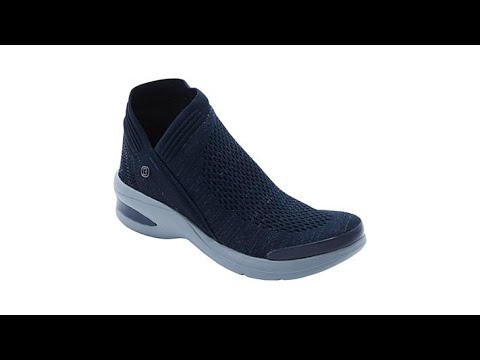
Bzees Romance Engineered Knit PullOn Bootie - Duration: 19:55.

For more infomation >> Bzees Romance Engineered Knit PullOn Bootie - Duration: 19:55.

-------------------------------------------

HAPPY BIRTHDAY Cristiano Ronaldo! | CR7 Cristiano Ronaldo Birthday 2019 - Duration: 3:16.

Hello, welcome to my Youtube channel.

Today we created the famous Soccer Player, Cristiano Ronaldo birthday celebration video.

Remember to comment and subscribe to the channel!

Good Trips...

Cristiano Ronaldo happy birthday!

Who is Cristiano Ronaldo?

Birthday, February 5, 1985,

Birthplace, Santo Antonio, Portugal,

Age, 34 years old,

Birth Sign, Aquarius,

Cristiano Ronaldo About,

One of the top soccer players in the world, he rose to fame as a forward for Real Madrid

after being acquired from Manchester United for a $131.6 million transfer fee in 2009.

He became captain of the Portuguese national team in 2008 and received the Ballon d'Or

as the European Footballer of the Year in 2008, 2013, 2014, 2016 and 2017.

In 2018, he signed with Juventus.

Cristiano Ronaldo Before Fame,

His full name is Cristiano Ronaldo dos Santos Aveiro.

He was named Ronaldo in honor of Ronald Reagan, his father's favorite actor.

Cristiano Ronaldo Trivia,

He broke a number of La Liga records as well as Real Madrid franchise records and scored

his 300th career goal in January 2013.

Cristiano Ronaldo Family Life,

He was raised with an older brother named Hugo and two older sisters, Katia and Elma.

He dated Russian model Irina Shayk from 2010 until 2015.

He became a father to Cristiano Jr. in July 2010 and in June 2017, he welcomed a pair

of twins named Eva and Mateo via surrogacy.

He and his girlfriend Georgina Rodriguez welcomed their first child together, a daughter named

Alana Martina, on November 12, 2017.

Cristiano Ronaldo Associated With,

He and Lionel Messi developed a great rivalry as the top two forwards in professional soccer

and leaders of La Liga's Real Madrid and FC Barcelona, respectively.

Thanks for watching the video, you can share the video for Cristiano Ronaldo fans.

Goodbye!

Không có nhận xét nào:

Đăng nhận xét